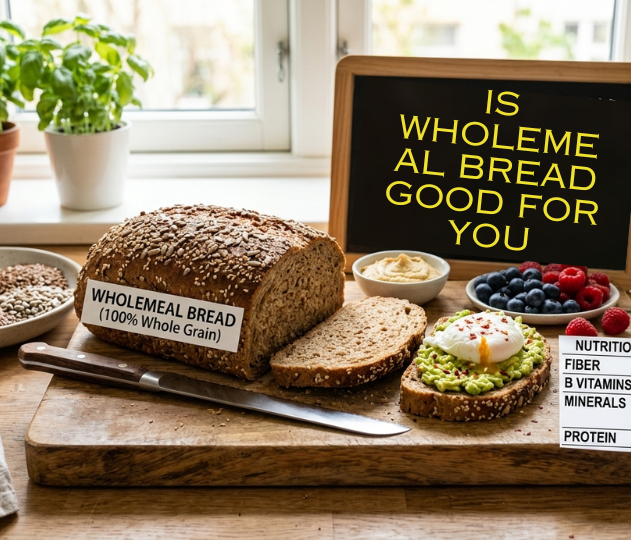
Bread has been the “staff of life” for millennia, but in the modern era of low-carb diets and gluten-free trends, it has often been unfairly vilified. If you are standing in the grocery aisle wondering if that loaf of grainy brown bread is actually a health food or just clever marketing, you aren’t alone.
Is Wholemeal Bread Good For You? Wholemeal bread is one of the most accessible sources of complex carbohydrates and essential nutrients available. Unlike its refined white counterpart, wholemeal bread retains the grain’s integrity, offering a powerhouse of fiber and minerals. This guide dives deep into why wholemeal bread deserves a spot on your plate, the science behind its benefits, and how much you should actually be eating.
| Category | Details | Key Benefits | Recommended Intake | Important Notes |
| Nutritional Value | Rich in fiber, vitamins (B-complex), and minerals (iron, magnesium) | Supports overall health and energy levels | 2–4 slices daily (based on diet) | Choose 100% wholemeal for maximum nutrients |
| Calories | حوالي 70–90 calories per slice | Provides sustained energy | Monitor portion size | Calories can increase with toppings |
| Fiber Content | 2–4g per slice | Improves digestion and gut health | Include regularly in meals | Helps prevent constipation |
| Protein | 3–5g per slice | Supports muscle repair and satiety | Combine with other protein sources | Not a complete protein |
| Carbohydrates | Complex carbs | Slow energy release stabilizes blood sugar | Ideal for breakfast/lunch | Better than refined carbs |
| Heart Health | Contains whole grains | Helps lower cholesterol levels | Regular moderate intake | Pair with healthy fats |
| Weight Management | High satiety value | Reduces overeating | Use in balanced meals | Avoid high-calorie spreads |
| Digestive Health | High fiber supports gut bacteria | Promotes regular bowel movement | Daily inclusion recommended | Drink enough water with fiber |
| Potential Drawbacks | Gluten, phytates, added sugars (in some brands) | Awareness helps make better choices | Limit if sensitive | Always check ingredient labels |
| Best Usage | Toasts, sandwiches, and sides with meals | Versatile and nutritious | 1–2 slices per meal | Pair with vegetables/protein |
What Exactly is Wholemeal Bread?
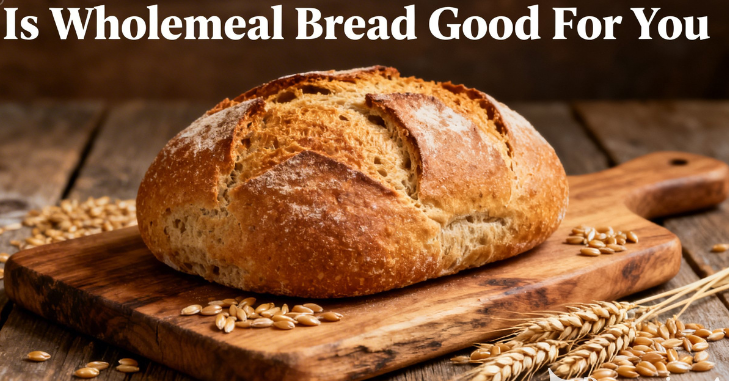
To understand why wholemeal bread is good for you, we first need to look at the anatomy of a grain. A whole grain consists of three distinct parts:
- The Bran: The multi-layered outer skin of the edible kernel. It contains antioxidants, B vitamins, and, most importantly, fiber.
- The Germ: The embryo, which has the potential to sprout into a new plant. It is packed with B vitamins, some protein, minerals, and healthy fats.
- The Endosperm: The germ’s food supply, which provides essential energy to the young plant. This is the largest portion of the kernel and contains starchy carbohydrates and some proteins.
Wholemeal bread is made from flour that uses all three parts of the grain. White bread, by contrast, is made from flour where the bran and germ have been stripped away, leaving only the starchy endosperm. This process removes about 80% of the fiber and a significant portion of the vitamins and minerals.
Is Wholemeal Bread Good For You: Detailed Nutritional
When we talk about the nutrition of wholemeal bread, we are looking at a dense package of micro and macronutrients. While specific values vary by brand, a standard slice (approx. 40g) typically contains:
- Calories: 90–110 kcal
- Fiber: 3g – 5g
- Protein: 4g – 6g
- Carbohydrates: 15g – 20g
- Fats: 1g – 2g
- Vitamins: Rich in B1 (Thiamin), B2 (Riboflavin), B3 (Niacin), and Folate.
- Minerals: High in Magnesium, Iron, Zinc, and Selenium.
5 Science-Backed Health Benefits of Wholemeal Bread
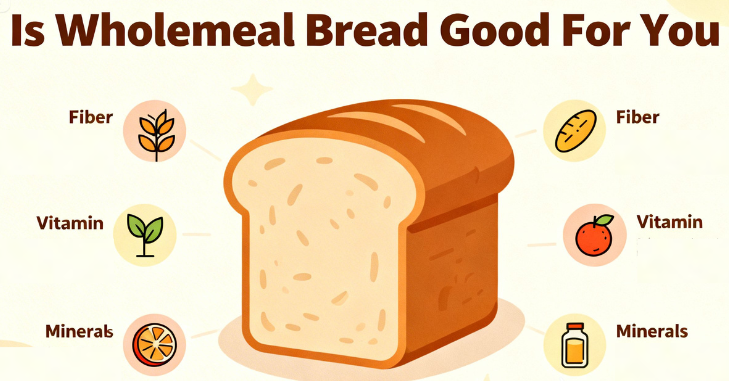
1. Superior Digestive Health
The most famous benefit of wholemeal bread is its high fiber content. It contains both soluble and insoluble fiber. Insoluble fiber adds bulk to the stool and helps food pass more quickly through the stomach and intestines, preventing constipation and promoting regularity.
2. Heart Health and Cholesterol Management
Studies consistently show that a diet high in whole grains reduces the risk of heart disease. The fiber in wholemeal bread helps lower “bad” LDL cholesterol by binding to bile acids and dragging them out of the body as waste. Furthermore, the presence of antioxidants like Vitamin E and selenium helps protect blood vessels from oxidative stress.
3. Blood Sugar Regulation
Unlike white bread, which has a high Glycemic Index (GI) and causes rapid spikes in blood sugar, wholemeal bread has a medium-to-low GI. The fiber slows down the digestion of starch, leading to a slower, more sustained release of glucose into the bloodstream. This is crucial for preventing Type 2 diabetes and managing energy levels throughout the day.
4. Weight Management and Satiety
Because wholemeal bread is rich in fiber and protein, it is much more “filling” than refined bread. This increased satiety means you are less likely to reach for snacks shortly after a meal. Including wholemeal bread in a balanced diet can help prevent overeating and support long-term weight maintenance.
5. Reduced Risk of Stroke
Large-scale observational studies have shown that people who eat 3 or more servings of whole grains daily have a 20% to 30% lower risk of stroke than those who eat little to no whole grains.
Comparing Breads: Wholemeal vs. White vs. Multigrain
It is easy to get confused by labels like “wheat,” “brown,” or “multigrain.” Here is how they stack up against each other:
| Feature | Wholemeal Bread | White Bread | Multigrain Bread |
| Grain Usage | Entire grain (Bran, Germ, Endosperm) | Endosperm only | Various grains (may be refined) |
| Fiber Content | High (Typical 7g per 100g) | Low (Typical 2g per 100g) | Variable (Medium to High) |
| Glycemic Index | Low to Medium | High | Medium |
| Micronutrients | Naturally High | Often added back (fortified) | Variable |
| Satiety Level | High | Low | Medium to High |
Daily Consumption: How Much Should You Eat?
While wholemeal bread is good for you, moderation is key. The “ideal” amount depends on your activity level, age, and gender.
- For the average adult, 2–4 slices of wholemeal bread per day is generally considered a healthy portion within a balanced diet.
- For athletes: Higher amounts may be necessary to provide the complex carbohydrates needed for glycogen replenishment.
- For weight loss: Stick to 1–2 slices a day, and pair them with high-protein toppings like eggs, avocado, or lean turkey to further enhance satiety.
Pro Tip: Look for the “100% Whole Grain” or “Wholemeal” stamp. If the first ingredient on the label is “Wheat Flour” or “Enriched Flour,” it is likely just white bread with a bit of caramel coloring.
Wholemeal Bread and Long-Term Nutritional Balance
Another important advantage of wholemeal bread is its role in supporting long-term nutritional balance. Because it contains a variety of essential nutrients naturally found in the whole grain, it can help contribute to daily requirements for important vitamins and minerals such as manganese, phosphorus, and selenium.
Regular consumption of wholemeal bread as part of a balanced diet may also support healthy energy production and cognitive function due to its B-vitamin content. Unlike highly processed carbohydrate sources, wholemeal bread provides a steadier source of fuel for the body, making it a practical choice for people seeking sustained energy throughout busy workdays, study sessions, or physical activities.
Potential Drawbacks and Considerations
Even though wholemeal bread is a nutritional powerhouse, it is not suitable for everyone. One important concern is gluten sensitivity, as wholemeal bread contains gluten and can cause serious digestive issues for individuals with celiac disease or non-celiac gluten intolerance.
Another factor to consider is the presence of antinutrients such as phytates, which can interfere with the absorption of minerals like calcium and zinc; however, for most people with a balanced diet, this is not a major concern, and the overall benefits outweigh this drawback.
Additionally, some commercial wholemeal breads include added sugars or high-fructose corn syrup to improve taste, so it is always important to carefully read ingredient labels before making a purchase.
Creative Ways to Include Wholemeal Bread in Your Diet
If you find wholemeal bread a bit “boring,” try these nutrient-dense combinations:
- The Power Breakfast: Toasted wholemeal bread with smashed avocado, a poached egg, and a sprinkle of chili flakes.
- The Mediterranean Lunch: Wholemeal pita or bread slices with hummus, roasted peppers, and spinach.
- The Protein Snack: A single slice of toasted wholemeal with natural almond butter and sliced banana.
Conclusion
So, is wholemeal bread good for you? The answer is a resounding yes. It provides a unique combination of fiber, B vitamins, and minerals that are stripped away during the refining process of white bread. By choosing wholemeal, you are supporting your heart, your gut, and your metabolism.
When selecting your loaf, be a savvy consumer: read the labels, avoid unnecessary additives, and enjoy it as part of a diverse diet rich in vegetables, proteins, and healthy fats. Switching from white to wholemeal is one of the simplest yet most impactful changes you can make for your long-term health.
Want to know about Festive Christmas Starter Ideas: Elegant, Flavorful, and Inclusive Recipes to Impress Guests, Celebrate Seasonal Ingredients, and Set the Perfect Holiday Table Check out our
Food category.
FAQs
Typically, 2–4 slices per day is suitable for most people, depending on their calorie needs, activity level, and overall diet.
It can support weight management because its fiber content helps you feel full for longer, reducing overall calorie intake. However, it should be eaten in moderation.
Generally, yes. Wholemeal bread contains more fiber, vitamins, and minerals because it uses the entire grain, while white bread is more processed and less nutritious.
Yes, wholemeal bread can be consumed daily as part of a balanced diet. Its high fiber and nutrient content support digestion and energy levels, but portion control is important.