Lace shorts can move easily between relaxed summer outfits, evening looks, and softer layered styles. The right pair depends on lining, fabric weight, rise, and where you plan to wear them. UK shoppers can now find everything from simple lace-trim designs to fully patterned statement pairs.
Choosing lace shorts becomes easier when you separate decorative details from practical construction. A beautiful pattern matters, but comfort, coverage, and fit matter more once you start wearing them. This guide explains the differences so you can choose a pair that earns its place in your wardrobe.
Direct answer: Lace shorts work best when the cut suits the occasion, and the fabric offers enough coverage. Choose lined designs for everyday wear, softer satin-trimmed pairs for relaxed outfits, and structured or tailored versions for dressier plans. Check the rise, waistband, lining, and hem before buying.
Lace Shorts at a Glance
| Feature | What to look for | Best suited to |
|---|---|---|
| Full lace overlay | Lining beneath patterned fabric | Summer outfits and occasions |
| Lace trim | Decorative edging on another fabric | Everyday styling |
| Satin with lace | Soft drape and delicate edging | Relaxed or evening looks |
| Cotton or crochet effect | Airier, textured construction | Holidays and warm weather |
| High waist | Defined waist and more coverage | Tucked tops and co-ords |
| Elastic waist | Flexible, easy fit | Casual wear and travel |
| Scalloped hem | Decorative edge | Feminine summer styling |
Which Lace Shorts Style Should You Choose?
The best option depends on how dressed-up you want to look. Current UK ranges include lace-trim casual pairs, embroidered styles, satin combinations and full lace designs. Prices also vary considerably between high-street and designer retailers.
A useful starting point is deciding whether lace should be the main fabric or only a detail. Full-pattern designs create a stronger statement, while a narrow trim is easier to mix with everyday pieces. The table below shows where each version works best.
| Style | Main advantage | Possible drawback | Best choice for |
|---|---|---|---|
| Full lace | Strong visual texture | May need substantial lining | Parties and summer occasions |
| Lace-trim | Easier to wear regularly | Less dramatic | Everyday outfits |
| Satin and lace | Soft and polished | Can look nightwear-inspired | Evenings and relaxed dressing |
| Cotton lace | Breathable feel | Can crease | Holidays and warm days |
| Tailored lace | More structured shape | Less casual | Smart occasions |
| Lace-detail denim | Familiar everyday base | Heavier in hot weather | Casual weekends |
| Co-ord style | Easy matching outfit | Less flexible alone | Events and nights out |
Our recommendation: start with a lined, mid-rise or high-rise pair with restrained detailing. It gives you more outfit options and reduces concerns about transparency. A neutral shade such as black, cream, or navy is also easier to repeat.
Full Lace or Lace Shorts Trim: What Is the Difference?
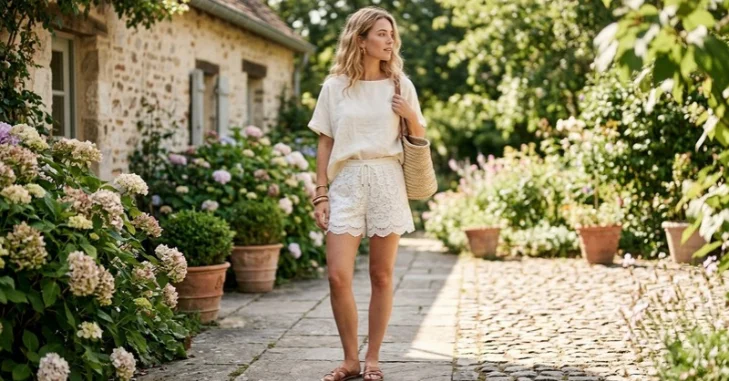
A full lace shorts design uses patterned material across most or all of the garment. These pieces usually need a lining because the outer material contains open sections. Scalloped edges are also common because they show the pattern without adding another hem.
Lace-trim designs use another material for the main body. The decorative section may appear around the hem, sides, or pockets. Retailers such as Roman currently sell pull-on designs with lace detailing rather than a complete lace construction.
The second option usually feels easier for daytime wear. It gives you the visual interest without making the entire outfit depend on one texture. It can also work better with casual trainers, simple sandals, and plain knitwear.
How Should They Fit?
A comfortable pair should sit securely without pulling across the hips or upper thighs. The lace should remain flat when you stand, walk, and sit. Stretch at the waistband can help, but it should not compensate for a cut that is too small.
Check the inner lining separately from the outer layer. Sometimes the decorative layer feels roomy while the lining underneath sits tightly. If the lining rides upward during movement, trying the next size is often more comfortable.
Length matters as much as waist size. Some current fashion options are deliberately cut as micro or mini styles, while others use longer casual shapes. Choose the length you will wear confidently rather than the length that photographs best.
What Colours Are Easiest to Style?
Black is one of the easiest choices for evenings because it works with simple tops and stronger footwear. It also lets the lace texture show without relying on bright colour. For a coordinated look, pair it with black layers and introduce contrast through jewellery or shoes.
White and cream work particularly well through spring and summer. They suit linen shirts, neutral vests, tan sandals and lightweight knitwear. A proper lining matters more with pale colours because transparency becomes easier to notice.
Navy, brown and softer pastels can make the style feel less expected. Next currently lists lace and lace-trim options across several colours and materials. These shades are useful when black feels too evening-focused and white feels too seasonal.
How to Style Lace Shorts Without Looking Overdone
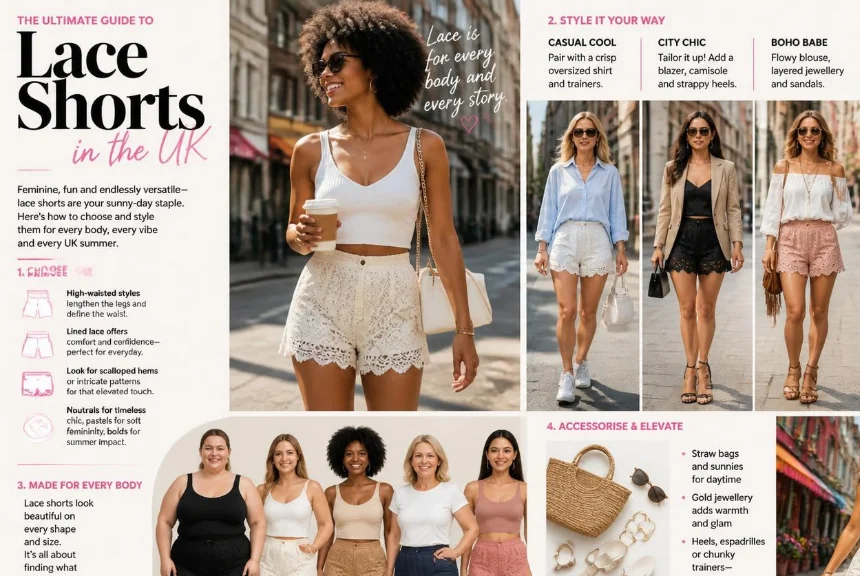
The easiest approach is to balance the texture with simpler pieces. If the bottom half carries a detailed floral pattern, choose a plain vest, fitted tee, or uncomplicated shirt. This keeps the outfit clear and prevents several decorative elements from competing.
For daytime, try a relaxed shirt, flat sandals,s and a simple shoulder bag. A tucked shirt works well with higher waists because it keeps the proportions defined. You can also borrow ideas from Scrollex’s wider fashion coverage, including its guide to Balenciaga sock shoes and modern footwear styling.
For evening plans, change the balance rather than adding more decoration. Choose a fitted top, a compact bag and cleaner footwear. Small accessories often work better than heavily embellished pieces, although Scrollex’s guide to jewellery and self-care offers more accessory ideas.
Hair can change the overall mood too. A relaxed updo makes detailed clothing feel lighter, while smooth loose hair creates a more polished finish. For more ideas, see Scrollex’s shoulder-length hair styling guide.
What Should You Check Before Buying?
Start by reading the fabric composition and care instructions. Lace can be made from cotton, polyester, nylon, rayon or blends, and each behaves differently. Current UK products show considerable variation in both fibres and construction.
Next, check whether the garment is fully lined or only lined across certain areas. A lining can make a visually delicate piece much easier to wear outside holiday settings. It may also reduce snagging against underwear, although the outer fabric still needs careful handling.
Finally, study the closure and waistband. Elasticated pull-on designs offer convenience, while zips can produce a cleaner fitted shape. Neither is automatically better, so choose according to comfort and the outfit you want.
Are They Suitable for Everyday Wear?
Yes, provided you choose a less delicate construction. Lace trim on cotton, viscose or a stretch woven base usually feels more practical than an entirely sheer design. A comfortable lining also helps when you expect to sit, walk or travel for several hours.
Footwear can make the outfit feel more ordinary. Trainers, flat sandals and simple loafers reduce the dressy effect immediately. A lightweight jumper or relaxed shirt can do the same during cooler British weather.
The garment still needs sensible care. Decorative threads can catch on rough surfaces, jewellery or bag hardware. Checking the care label before washing will help protect the shape and patterned finish.
How to Care for Delicate Lace
Always follow the label because fibre blends vary. Some current UK options are machine washable, while more delicate versions may need gentler treatment. Avoid assuming every patterned garment can handle the same wash cycle.
If machine washing is allowed, a laundry bag can reduce contact with zips and fasteners. Use the recommended temperature and reshape the garment after washing. High heat can be harder on elastic, delicate fibres, and attached trims.
Store pairs where hooks and jewellery cannot catch them. Folding often works better than squeezing delicate fabric between garments with exposed fastenings. Small habits can prevent pulled threads from becoming permanent damage.
The Bottom Line
The strongest lace shorts are not necessarily the most detailed pair. A useful design combines attractive texture with secure lining, comfortable movement and a waistband that works for your body. Those practical details determine whether you wear them once or throughout several seasons.
For most UK wardrobes, a neutral lined design offers the easiest starting point. You can dress it down with flats and a simple shirt or make it sharper with a fitted top. Choose for real outfits you already wear, and the piece becomes much easier to justify.
Frequently Asked Questions About Lace Shorts
Are lace shorts fashionable in the UK?
Lace shorts remain available across both high-street and designer retailers in Britain. Current ranges include full lace, lace-trim, satin and embroidered versions. Their usefulness depends more on styling and construction than one short-lived trend.
What should you wear underneath them?
Choose smooth, flat-edged underwear close to your skin tone when the lining is pale or lightweight. Black underwear usually works beneath opaque black designs. Always check the garment in daylight because changing-room lighting can hide transparency.
Can you wear them during the day?
Yes, especially when the design uses a casual base fabric or limited trim. Pair them with a plain shirt, vest, st or lightweight knit. Flat footwear also keeps the outfit relaxed.
Are high-waisted styles more flattering?
They can create a defined waist and work well with tucked tops. Lower-rise pairs create a softer, more relaxed silhouette. The better choice depends on your proportions and comfort rather than a universal rule.
Are they suitable for holidays?
They can work well in warm destinations, particularly with lightweight tops and sandals. Breathability depends on the main fibre and lining rather than appearance alone. Check both materials before assuming a decorative fabric will feel cool.