Lord Lucan’s net worth was negative when he disappeared. When his affairs were assessed in August 1975, nine months after he vanished, his estate held roughly £22,632 in assets against about £45,000 of unsecured debt, leaving the 7th Earl of Lucan insolvent by around £22,000. The “around $2 million” figure repeated across celebrity wealth sites does not appear in any court or probate record.
That gap between the legend and the paperwork is the real story. Richard John Bingham inherited a reputed fortune in 1964, spent the following decade losing it at a Mayfair card table, and disappeared on the night of 7 November 1974 owing money to four banks at once. This guide sets out what he actually had, where it went, who ended up with what, and why inflated net worth estimates keep circulating half a century later.
Lord Lucan’s Net Worth at a Glance
The table below uses only figures that appear in the documented record of his finances, not aggregator guesses. Each line is explained further down the page.
| Measure | Figure (as recorded) |
|---|---|
| Assets recorded in his estate | £22,632 (August 1975) |
| Unsecured debts recorded | Approximately £45,000 (August 1975) |
| Effective net worth | Negative, roughly minus £22,000 |
| Bank overdrafts at November 1974 | £14,177 across four accounts |
| Reported inheritance (1964) | £250,000, broadly £5 million in today’s money |
| Annual trust income by 1974 | About £12,000 |
| Family silver sold (March 1976) | Around £30,000 |
| Commonly quoted online figure | “$2 million”, unsupported by any record |
If you only need one sentence: at the moment he disappeared, Lord Lucan’s liabilities exceeded his assets by roughly £22,000, which is in the region of £200,000 in today’s terms.
How to Read the Numbers Properly
Most net worth articles about Lucan mix up three different things, which is why the figures they quote vary so wildly. Before looking at the timeline, it helps to separate them:
- Capital he inherited. The £250,000 he came into in 1964 was a one-off sum, and much of it was spent or borrowed against within ten years.
- Income he received. Family trusts paid him around £12,000 a year. That was a generous income for the period, but it was income, not a stockpile of wealth.
- What he owned when he vanished. This is what “net worth” actually means, and it is the only figure that can be checked against the estate assessment. It was below zero.
A useful rule when you read any celebrity wealth figure for a historical figure: ask which of those three it describes, what date it applies to, and which document it comes from. If an article cannot answer those questions, treat the number as a guess.
Where the Money Came From: The 1964 Inheritance
Richard John Bingham was born on 18 December 1934 at 19 Bentinck Street, Marylebone. He was educated at Eton and served with the Coldstream Guards in West Germany between 1953 and 1955. Afterwards he took a job at a merchant bank in the City, a respectable career path for a young man of his background, and one he abandoned in 1960 after a single spectacular night at the card table.
When his father died in January 1964, Bingham became the 7th Earl of Lucan and came into a reputed £250,000. Adjusted with the Bank of England’s inflation measures, that is broadly equivalent to about £5 million today. Alongside the lump sum, family trusts produced an income of roughly £12,000 a year, something like £250,000 a year in modern money.
Two points are worth separating, because most articles on the subject blur them:
- The earldom is not the earl. The Lucan title dates to 1795 and the family historically held large Irish estates in County Mayo. Those holdings had long gone by the twentieth century and were never his to spend.
- His wealth was income, not a property empire. He owned no great country seat. His money sat in trusts, in a leasehold London house at 46 Lower Belgrave Street, and in chattels, chiefly silver and paintings.
In the same period he married Veronica Duncan on 20 November 1963, and the couple’s three children followed in 1964, 1967 and 1970. A household with a nanny, a Belgravia address and a gambling habit was expensive to run, and the trust income was the main thing paying for it.
Where It Went: The Clermont Club Years
Lucan gave up salaried work because he believed he could live on gambling. The evidence for that belief was essentially one result: around 1960 he took £26,000 off a two-day game of chemin de fer, more than twice what his trusts would later pay him in a year.
He never repeated it. As a founding member of John Aspinall’s Clermont Club in Berkeley Square, he became a fixture at the backgammon and chemin de fer tables, and the recorded losses were heavy. One night reportedly cost him £8,000, about two-thirds of his annual income. Another cost £10,000. He also raced powerboats, drove an Aston Martin and funded a lifestyle sized for the income he had in 1964, not the one he had by 1973.
The Other Drains on His Money
Gambling was the biggest leak, but it was not the only one. Two further costs sit in the record:
- The custody battle. His separation from Veronica, Lady Lucan, and the 1973 fight over their three children reportedly cost him around £20,000 in legal fees, and he lost.
- Compound borrowing. By autumn 1974 he was estimated to have built up some £50,000 in debts in the space of two months, borrowing to service earlier borrowing.
Why the Losses Hit So Hard
A professional gambler needs a bankroll that survives bad runs. Lucan’s did not. With income of about £12,000 a year, a single £8,000 or £10,000 loss wiped out most of a year’s money in an evening, and there was no salary or business behind him to absorb it. Each bad night pushed him further into overdraft and personal loans, and each loan carried interest that the next win had to cover. That pattern, rather than any one dramatic loss, is what turned a comfortable aristocrat into an insolvent one.
Four Banks, One Aristocrat: The November 1974 Overdrafts
The clearest snapshot of Lucan’s finances in the days before the murder is his banking. He was overdrawn at four institutions simultaneously:
| Bank | Overdrawn by |
|---|---|
| Midland | £5,667 |
| Lloyds | £4,379 |
| Coutts | £2,841 |
| National Westminster | £1,290 |
| Total | £14,177 |
Spreading an overdraft across four banks is not the behaviour of a man with £2 million in assets. It is the behaviour of a man who has run out of lenders willing to extend more credit. That detail matters because it underpins every serious account of his state of mind that autumn, and it is one of the reasons investigators and writers have treated money as a central part of the case rather than a side issue.
The Night of 7 November 1974
Sandra Rivett, the family’s 29-year-old nanny, was beaten to death in the basement of 46 Lower Belgrave Street. It was usually her night off, but she had swapped it. Lady Lucan, coming downstairs to look for her, was attacked in the darkness, broke free and ran to the Plumbers Arms at 14 Lower Belgrave Street, a few doors up the same street. She arrived covered in blood and asking for help.
That pub still trades, and it is the “Lord Lucan pub” people search for. The mid-nineteenth-century building was given Grade II listed status on 1 December 1987, and its role that night remains the best-known thing about it.
Lucan’s borrowed Ford Corsair was found abandoned in Newhaven, on the Sussex coast, on 10 November. It contained a length of bandaged lead piping similar to the murder weapon. He was never seen again.
The Inquest That Named Him, and Why It Could Never Happen Again
On 16 June 1975, a jury at Westminster Coroner’s Court returned a verdict of murder by Lord Lucan. Coroner Gavin Thurston recorded that “the following offence was committed by Richard John Bingham, Earl of Lucan, namely the offence of murder.”
It was the last time an English inquest jury named a murderer. Parliament removed that power from coroners’ courts with the Criminal Law Act 1977, because a person named in this way had no chance to defend themselves. Lucan therefore occupies an unusual legal position: formally accused by a coroner’s jury, never charged, never tried.
Who Got the Money: Probate, the Estate and the Silver
Because Lucan was missing rather than proven dead, his estate sat in limbo for a quarter of a century. The sequence ran like this:
- August 1975: his affairs are assessed, showing about £45,000 of unsecured debt against £22,632 of assets.
- March 1976: the family silver is sold at auction, raising around £30,000. That sale, more than anything else, stopped the estate collapsing entirely.
- 11 December 1992: he is presumed dead in chambers.
- 27 October 1999: probate is granted and he is treated as legally dead, though no death certificate is issued.
- 3 February 2016: the High Court issues a death certificate under the Presumption of Death Act 2013, allowing his son George Bingham to become the 8th Earl of Lucan.
So the honest answer to “did his children inherit his fortune?” is that there was no fortune to inherit. What his three children, Frances (born 24 October 1964), George (21 September 1967) and Camilla (30 June 1970), inherited was a title, a surname permanently attached to a murder, and accounts that had to be settled by selling the family’s possessions.
Why the Estate Took So Long
English law at the time offered no quick route to deal with the property of a missing person. Creditors could not simply be paid from an estate that technically still belonged to a living man, and the family could not wind things up without a court accepting that he was dead. The 2013 Act was designed to make that process simpler for families of missing people generally, and the Lucan case became one of its best-known uses. If you are dealing with a missing relative’s affairs yourself, the rules have changed considerably since 1975, so take advice from a solicitor rather than relying on this case as a template.
Why the “$2 Million” Figure Keeps Being Repeated
Search “Lord Lucan net worth” and you will see the same number again and again. It survives for four reasons, none of them evidential:
- Aggregator arithmetic. Celebrity wealth sites estimate from job title and social class. “British earl” produces a seven-figure guess by default.
- The title is mistaken for the money. A 200-year-old earldom sounds like landed wealth. Lucan’s wealth was a trust income he had already outspent.
- Currency drift. A US dollar figure attached to a British aristocrat whose finances were recorded entirely in sterling is a strong sign nobody consulted a primary document.
- Nobody checks a man who is not there. There is no estate to audit publicly, no company filings and no living subject to correct the record.
Myth Versus Record
| Common claim | What the record shows |
|---|---|
| He was worth about $2 million | His estate was insolvent by roughly £22,000 |
| He lived off a vast landed estate | The family’s Irish lands were long gone; his money came from trusts |
| He had money to fund a life in hiding | He was overdrawn at four banks and borrowing to repay loans |
| His children inherited a fortune | The silver was sold to settle debts; the son inherited the title |
Height, Appearance and the Sightings Problem
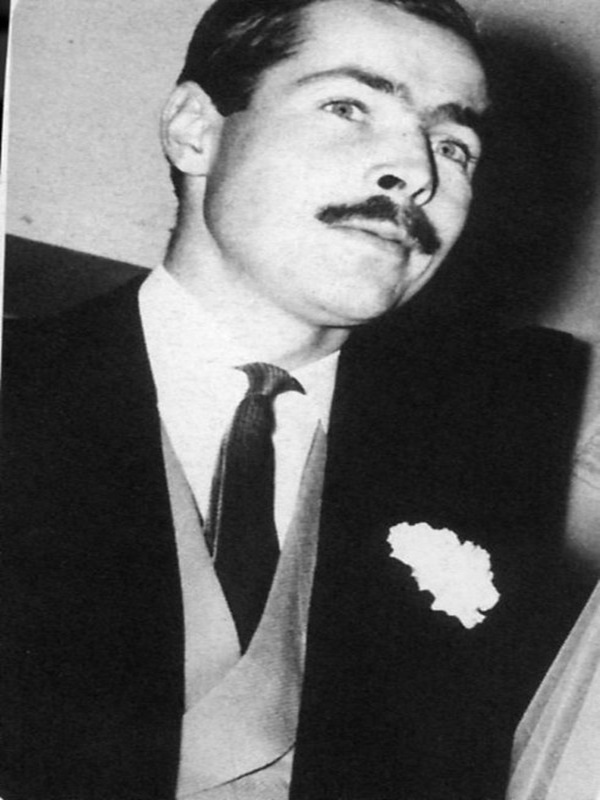
Contemporary police descriptions put Lucan at around 6ft 2in (188cm), heavily built, with a clipped moustache and an upright bearing. He was reportedly screen-tested for the role of James Bond in the early 1960s, which says a lot about how he was seen at the time.
That striking appearance is exactly why the sightings have never stopped, and why none has held up:
- 1974: the missing MP John Stonehouse is briefly arrested in Australia on suspicion of being Lucan.
- 1982: a bounty hunter’s claim to have found him proves to be a hoax.
- 2003: a supposed Lucan living in Goa turns out to be the Liverpool folk musician Barry Halpin.
- 2020 to 2021: a Brisbane pensioner is named as a candidate and ruled out by Australian federal police in April 2021.
The financial record is relevant here too. A man who left with overdrafts at four banks and no accessible capital would have needed wealthy friends to support him abroad for decades. That theory has been argued many times, but it has never been proven.
The Case in 2026: Documentaries, Podcasts and Press
The story has had a long second life, which is why search interest never fades:
- Television. ITV’s two-part drama Lucan (2013) cast Rory Kinnear in the title role. In November 2024 the BBC aired a three-part documentary, Lucan, built around the long-running private investigation by Neil Berriman, Sandra Rivett’s son, who was adopted as a baby and only learned who his mother was in 2004.
- Podcasts. Series such as The Trial of Lord Lucan have re-argued the evidence for a modern audience, treating it as an unresolved case rather than a period curiosity.
- Newspapers. British tabloids have run fresh Lucan claims almost every year since 1974, from escape-by-boat theories to deathbed confessions and DNA claims. Very little of it has been tested in court.
The Metropolitan Police file has never been formally closed. Were Lucan alive today he would be 91.
Lord Lucan: Key Facts
| Detail | Record |
|---|---|
| Full name | Richard John Bingham, 7th Earl of Lucan |
| Born | 18 December 1934, Marylebone, London |
| Education | Eton College |
| Military service | Coldstream Guards, 1953 to 1955 |
| Occupation | Peer; professional gambler |
| Height | Reported as approximately 6ft 2in (188cm) |
| Married | Veronica Duncan, 20 November 1963 |
| Children | Frances (1964), George (1967), Camilla (1970) |
| Known for | The murder of Sandra Rivett and his disappearance, 7 November 1974 |
| Legal status | Probate 1999; death certificate issued 3 February 2016 |
| Successor | George Bingham, 8th Earl of Lucan |
For a fuller account of his life, ancestry and the investigation, see this Encyclopaedic biography, which also lists the main published books on the case.
If you are interested in how other British broadcasters’ finances compare, read our breakdown of Michael Aspel’s Net Worth.
Bottom Line: A Fortune That Was Already Gone
The lasting image of Lord Lucan is a rich man who bought his way out of trouble and lived comfortably abroad on inherited money. The paperwork does not support it. By November 1974 he had spent a £250,000 inheritance, exhausted his credit at four banks, lost custody of his children and was carrying debts that outweighed everything he owned.
That version is worth holding on to, not because it solves the disappearance, but because it removes the most convenient explanation for it. Whatever happened after he left Newhaven, he did not have the money to fund a comfortable half-century in hiding. And beneath the aristocratic myth sits Sandra Rivett, a 29-year-old woman whose murder has never been tried in a criminal court.
For another figure whose finances are often misreported, see Vili Fualaau Net Worth, or browse more profiles in our Entertainment category.
Frequently Asked Questions
What was Lord Lucan’s net worth when he disappeared?
It was negative. When his affairs were assessed in August 1975, his estate held roughly £22,632 in assets against about £45,000 of unsecured debt, leaving him insolvent by around £22,000. The widely repeated $2 million figure has no basis in any surviving record.
How much did Lord Lucan inherit?
He came into a reputed £250,000 when he became the 7th Earl of Lucan in January 1964, broadly £5 million in today’s money, plus family trust income of about £12,000 a year. He had spent most of it at the Clermont Club within a decade.
How much did Lord Lucan owe the banks?
As at November 1974 he was overdrawn at four banks at once: Midland £5,667, Lloyds £4,379, Coutts £2,841 and National Westminster £1,290. That came to £14,177 in total, on top of much larger unsecured borrowing.
Did Lord Lucan’s children inherit his money?
There was no fortune left to inherit. The estate was insolvent and the family silver was sold at auction in March 1976 for around £30,000 to help settle debts. His son George Bingham inherited the title, becoming 8th Earl of Lucan after a death certificate was issued in 2016.
Which pub did Lady Lucan run to on the night of the murder?
She ran to the Plumbers Arms at 14 Lower Belgrave Street in Belgravia, a few doors from the family home at number 46, on the evening of 7 November 1974. The mid-19th-century pub was Grade II listed in December 1987 and still trades today.
Was Lord Lucan ever charged with murder?
No. A coroner’s jury named him as Sandra Rivett’s murderer on 16 June 1975, but he was never charged or tried. It was the last time an English inquest jury was allowed to name a murderer, as the power was removed by the Criminal Law Act 1977.