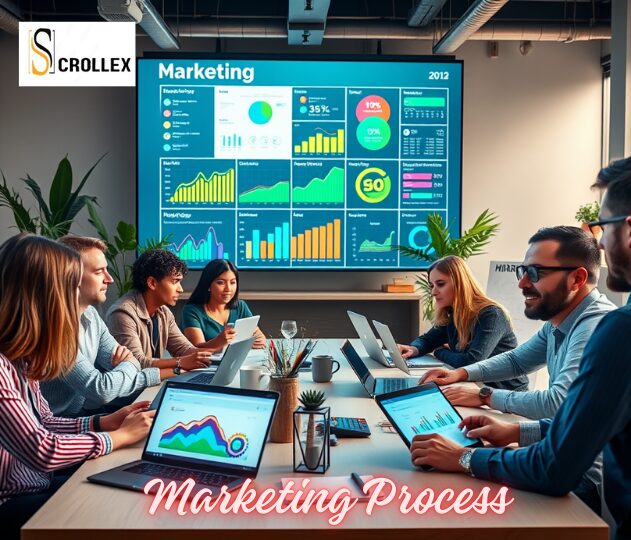
In the fast-paced and competitive business world, marketing is the backbone for achieving sustainable growth and effectively connecting with customers. It is more than just creating advertisements or promoting products—it’s a strategic framework encompassing planning, execution, analysis, and optimization. There is more on this in Able Skills.
A well-structured marketing process ensures businesses reach their target audience and deliver value that resonates deeply with them. This article explores the blueprint for building a winning marketing process, breaking down each phase to help businesses streamline their efforts and achieve measurable results.
Table About Some Facts Of The Marketing Process
| Situation Analysis | Conduct a comprehensive evaluation of current marketing efforts, including a SWOT analysis. |
| Target Audience Definition | Identify ideal customers, their demographics, pain points, and purchasing behaviours. |
| SMART Objectives | Set specific, measurable, achievable, relevant, and time-bound goals for marketing efforts. |
| Unique Selling Proposition | Develop a clear USP to differentiate your brand in the market. |
| Marketing Mix Strategy | Focus on the 4 Ps: Product, Price, Place, and Promotion for effective execution. |
| Content Strategy | Create a plan for developing and distributing valuable content to attract and engage the target audience. |
| Channel Selection | Identify the most effective platforms and media to reach your target audience. |
| Budget Allocation | Determine financial resources for marketing initiatives and allocate them effectively. |
| Timeline Development | Create a detailed schedule for implementing marketing activities and milestones. |
| Cross-Departmental Collaboration | Encourage communication between marketing and other departments for alignment |
| Data-Driven Insights | Utilized analytics tools to track KPIs and refine strategies based on performance data. |
| Implementation and Optimization | Execute the marketing plan, monitor progress, and continuously refine based on results. |
| Performance Metrics | Establish key performance indicators (KPIs) to measure the effectiveness of marketing efforts. |
| Customer Journey Mapping | Outline the steps, choices, and interactions a customer goes through to reach their goals. |
| Competitive Analysis | Compare your offerings and strategies with competitors in the market. |
Clarify Your Mission, Vision, and Objectives
A successful marketing process begins with clearly understanding your organization’s mission, vision, and objectives. These foundational elements serve as the guiding light for all marketing activities. Start by answering key questions:
- What is your company’s purpose?
- What long-term impact do you aim to achieve in your market?
- How do your objectives align with your mission?
For example, if your mission is to provide eco-friendly products, your marketing campaigns should emphasize sustainability and environmental benefits. By defining specific, measurable objectives—such as increasing market share by 10% within a year—you create a roadmap that keeps your marketing process focused and effective.
Understand Your Target Audience

Knowing your target audience is critical to building a winning marketing process. This involves creating detailed buyer personas that reflect your ideal customer’s demographics, psychographics, and behavioural traits. Key steps include:
- Market Research: Use surveys, focus groups, and analytics tools to gather data about your audience’s preferences and pain points.
- Segmentation: Divide your audience into smaller groups based on shared characteristics such as age, location, or buying behaviour.
- Competitor Analysis: Study how competitors engage with similar audiences to identify gaps and opportunities.
Understanding your audience allows you to craft personalized messages that resonate deeply with their needs and desires. For instance, if you’re targeting young professionals interested in fitness, you might focus on digital platforms like Instagram or YouTube to share engaging workout tips and product promotions.
Develop a Strong Positioning Strategy
Positioning is about creating a unique image of your brand in the minds of your target audience. A strong positioning strategy differentiates you from competitors and communicates the value you bring to customers. To develop this strategy:
- Conduct a thorough SWOT analysis to identify your organization’s internal strengths and weaknesses. Simultaneously, evaluate external market opportunities and potential threats, providing a holistic view of your competitive positioning.
- Use frameworks like PEST analysis (political, economic, sociocultural, and technological) to understand external factors influencing your market.
- Leverage the 5C Model (Company, Customers, Competitors, Collaborators, Climate) to refine your positioning.
For example, if you’re a luxury skincare brand, your messaging should emphasize premium ingredients and scientific innovation.
Key Steps in an Effective Marketing Process
An effective marketing process begins with research and analysis, where businesses identify their target audience, understand customer needs, and examine market trends to shape strategic decisions. From there, clear marketing goals are established to guide campaign planning and ensure alignment with overall business objectives.
The next step involves developing a tailored marketing strategy that selects the right mix of channels—such as digital advertising, content marketing, and social media—to reach and engage potential customers. Implementation follows, turning the strategy into action through creative execution and consistent messaging.
Finally, monitoring and evaluation allow marketers to track performance, refine tactics, and optimize future campaigns for better results. This structured approach ensures that marketing efforts are both purposeful and measurable, helping businesses build brand visibility and drive growth.
Craft a Comprehensive Marketing Plan
A well-documented marketing plan is the backbone of any successful marketing process. This plan should outline:
- Brand Identity: Define elements like logo design, colour schemes, tone of voice, and core messaging.
- Marketing Goals: Set SMART (Specific, Measurable, Achievable, Relevant, Time-bound) goals that align with broader business objectives.
- Budget Allocation: Allocate resources efficiently across campaigns while ensuring ROI is maximized.
Your marketing plan should also include an actionable timeline with milestones for each campaign phase. This ensures accountability and keeps the team aligned on deliverables.
Implement Your Marketing Mix

The marketing mix—commonly referred to as the “4 Ps” (Product, Price, Place, Promotion)—is an essential framework for executing your strategy effectively.
- Product: Highlight what makes your product or service unique and valuable.
- Price: Set competitive pricing strategies that reflect market demand and perceived value.
- Place: Choose distribution channels that make it easy for customers to access your offerings.
- Promotion: To increase awareness, use advertising campaigns, social media posts, email marketing, and other promotional tactics.
For instance, if you’re launching an e-commerce platform for handmade goods, focus on creating visually appealing product pages (Product), offering free shipping promotions (Price), optimising mobile accessibility (Place), and running Instagram ads targeting craft enthusiasts (Promotion).
Leverage Data-Driven Insights
Data is pivotal in refining the marketing process in today’s digital age. Implement tools like Google Analytics or CRM software to track key performance indicators (KPIs) such as:
- Website Traffic
- Conversion rates
- Customer acquisition costs
- Social media engagement
Analyzing this data helps identify what’s working and what isn’t. For example, suppose an email campaign has low open rates but high click-through rates on specific links. In that case, you might test different subject lines while retaining successful content formats.
Additionally, A/B testing should be used to experiment with variables like ad copy or landing page designs. This iterative approach ensures continuous improvement in campaign performance.
Optimize Workflows for Efficiency

A streamlined workflow is essential for executing complex marketing strategies without delays or miscommunication. Consider these steps:
- Map out every task required for each campaign phase.
- Assign responsibilities clearly within the team.
- Leverage specialized marketing project management platforms such as Asana or Trello to monitor task completion, visualize campaign progress, and streamline team collaboration.
Automation can enhance efficiency by handling repetitive tasks such as email scheduling or social media posting. This frees up time for creative brainstorming and strategic planning.
Monitor Results and Adapt Strategies
The final step in building a winning marketing process is ongoing evaluation and adaptation. Regularly review campaign performance against predefined KPIs to determine whether objectives are being met. Key actions include:
- Generating detailed reports on metrics like ROI or customer engagement.
- Gathering feedback from customers through surveys or reviews.
For example, suppose a paid advertising campaign isn’t delivering the expected results despite high impressions. In that case, you might revisit targeting parameters or tweak ad creatives for better alignment with audience preferences.
By treating the marketing process as an evolving system rather than a static plan, businesses can stay agile in responding to market trends and customer needs.
This structured approach ensures that every element of the marketing process—from initial planning to execution—is aligned with achieving long-term success while maintaining flexibility for growth and innovation.
Customer Retention and Brand Loyalty
While attracting new customers is an important part of the marketing process, retaining existing customers is equally valuable for long-term business growth. Businesses that focus on customer satisfaction, personalized communication, and post-purchase support often build stronger relationships and encourage repeat purchases.
Loyalty programs, exclusive offers, customer feedback initiatives, and consistent after-sales service help strengthen trust and improve customer retention rates. By maintaining meaningful relationships with existing customers, companies can reduce acquisition costs, generate positive word-of-mouth referrals, and create a loyal customer base that supports sustainable growth over time.
Conclusion
The marketing process is not just a set of steps—it’s a dynamic system that evolves with market trends, customer needs, and technological advancements. By following a structured blueprint, businesses can ensure their efforts are purposeful, efficient, and impactful. From clarifying objectives to leveraging data-driven insights, every phase of the process contributes to building stronger customer relationships and achieving long-term success.
However, the true power of the marketing process lies in its adaptability; it requires constant evaluation and refinement to stay relevant in an ever-changing landscape. Ultimately, the marketing process isn’t just about selling products—it’s about creating meaningful connections that drive loyalty and trust.
Are you curious to know more about “Participative Leadership: Key Characteristics, Pros & Challenges, Its Impacts, Examples and More“, then visit our “Business” category.
Frequently Asked Questions (FAQs)
The four marketing processes are analyzing the market, strategizing objectives, executing plans, and evaluating performance for continuous improvement.
There are multiple reasons for this: It has strong electrical insulating qualities, does not catch fire, is non-toxic, requires little maintenance, and is economical.
The industrial SF6 circuit breakers are rated at a high voltage output from 30 MVA to 1800 MVA to protect electronic appliances from big electrical surges.
Digital marketing supports the marketing process by providing channels such as search engines, social media, and email to reach, engage, and convert audiences efficiently.
Key marketing skills include research, communication, creativity, data analysis, strategic thinking, and an understanding of consumer behavior.