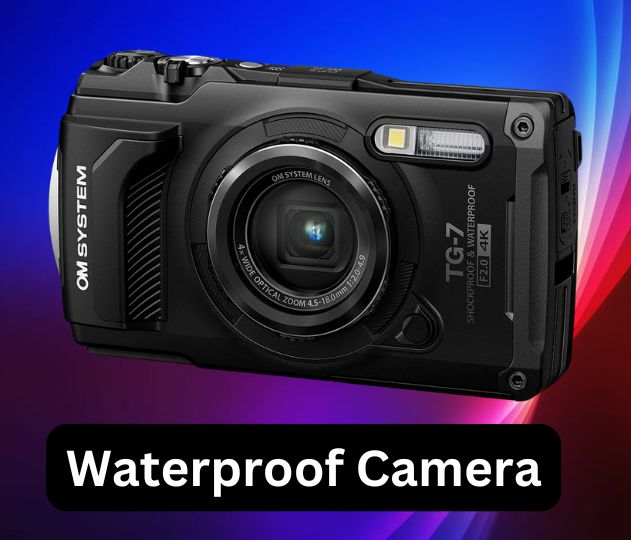
The best waterproof camera depends on how deep and how rough you plan to go. For snorkelling, beach holidays and pool days, a rugged compact rated to around 10 to 15 metres or an action camera is plenty. For scuba diving you need a camera plus a dive housing made for that model, because very few cameras are rated beyond about 15 to 20 metres on their own.
Once depth is sorted, the things that separate a good waterproof camera from a frustrating one are sensor size, lens brightness, stabilisation, battery life and controls you can actually press with wet or gloved hands. This guide covers the main types, what ratings such as IP68 really mean, the features that change your results, and how to care for the seals so the camera keeps working season after season.
Quick Answer: Which Type Suits You?
- Beach and pool holidays with children: an entry-level rugged compact, or a waterproof disposable if you would rather not risk anything expensive.
- Snorkelling and nature photos: a higher-end rugged compact with a bright lens and a good macro mode.
- Surfing, kayaking, cycling and vlogging: an action camera with strong electronic stabilisation and a good choice of mounts.
- Scuba diving: a rugged compact or action camera in a matching dive housing, or a mirrorless camera in a proper housing if underwater photography is a serious hobby.
Types of Waterproof Camera Compared
| Type | Typical depth without a housing | Strengths | Weaknesses | Best for |
|---|---|---|---|---|
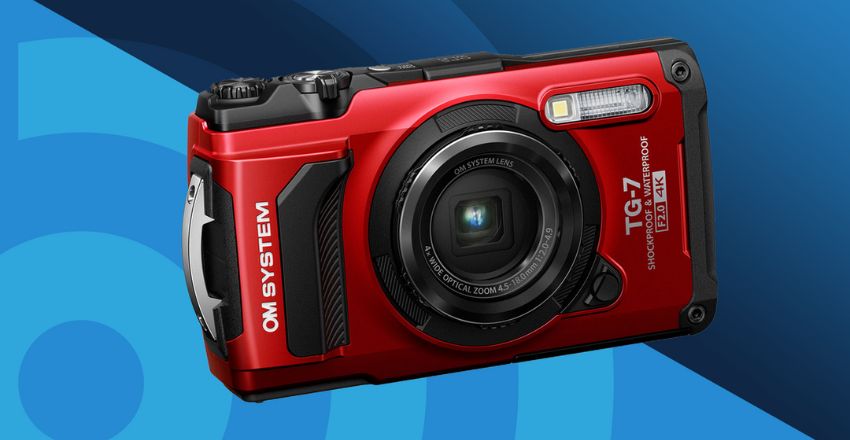
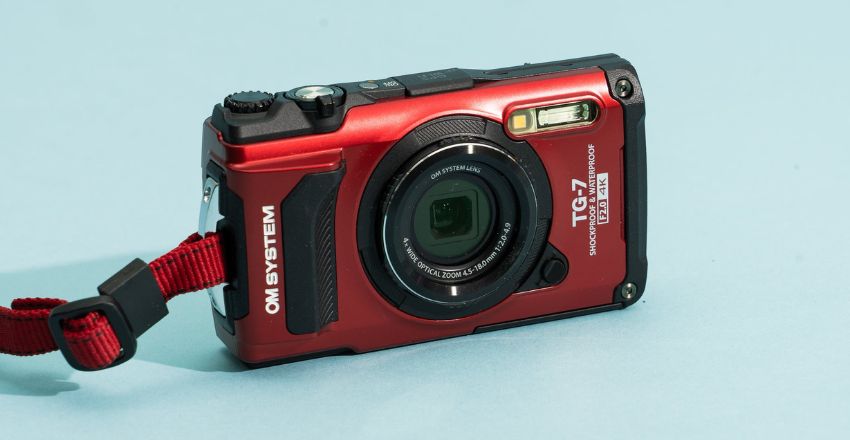
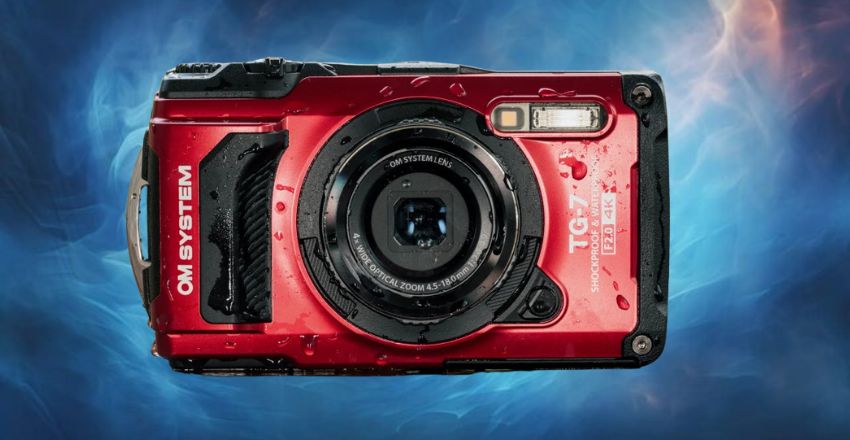
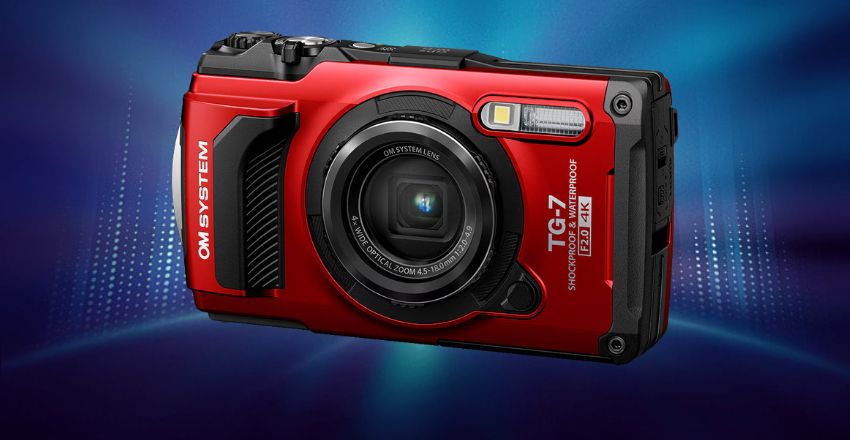
| Rugged compact (e.g. OM System Tough TG-7, Nikon Coolpix W150) | About 10 to 15 m | Optical zoom, proper stills, macro modes, shockproof | Small sensors, modest low-light quality | Snorkelling, family holidays, hiking |
| Action camera (e.g. GoPro HERO series, DJI Osmo Action) | About 10 to 20 m | Excellent stabilised video, tiny, many mounts | Fixed wide lens, no optical zoom, weaker stills | Surfing, cycling, watersports, vlogging |
| Waterproof disposable film camera | Usually shallow; check the packaging | Cheap, nothing to lose | Limited shots, basic quality, processing costs | Children, pool parties, festivals |
| Smartphone with IP68 rating | Splashes and brief immersion only | Always with you, strong processing | Not designed for swimming or diving; water damage often not covered | Rain and accidental drops |
| Mirrorless or DSLR in a dive housing | Depends on housing, often 40 m or more | Best image quality, interchangeable lenses | Expensive, bulky, needs lights | Serious underwater photography |
Depth ratings are approximate and change between models and generations, so always check the manufacturer’s specification for the exact camera you are buying rather than relying on a family name.
Rugged Compacts
A rugged compact looks like an ordinary point-and-shoot but has sealed doors, a toughened body and an internal zoom lens that never extends, so there is nothing for water to get past. They are the most versatile option for people who want good stills above and below the surface on the same day. The trade-off is a small sensor, which limits quality in dim water or indoor light.
Action Cameras
Action cameras are built around video. They are tiny, take mounts for helmets, handlebars, chest harnesses and surfboards, and their stabilisation smooths out bumpy footage remarkably well. The wide fixed lens is great for capturing a whole scene but less useful for photos of a distant subject, and still images are usually less detailed than a compact’s.
Disposable and Phone Options
A waterproof disposable is a sensible choice for young children or for events where a camera may be lost. A phone with an IP68 rating survives rain and a drop in the sink, but it is not a swimming camera. If you want phone photos in the sea, use a proper rated housing designed for your model and test it in a sink without the phone first.
Understanding Waterproof Ratings
Two kinds of rating appear on packaging, and they are not the same thing.
- Depth rating in metres: used by rugged cameras and action cameras. It tells you the maximum depth the camera has been designed for, usually for a limited time. A camera rated to 15 m is fine for snorkelling and shallow dives but not for a typical recreational dive to 18 m.
- IP rating (e.g. IP68): an international standard for dust and water resistance. The “8” means continuous immersion beyond 1 metre, but the exact depth and time are set by the manufacturer, and phones are usually tested in still fresh water. Salt water, chlorine, the pressure spike from jumping in and hot water can all defeat seals that pass an IP test.
For diving, add a housing or dive case designed for that exact model. These typically extend the rating to 40 to 60 metres and protect the camera’s own seals from pressure.
Common Rating Mistakes
- Assuming a rating is permanent. Seals age, and a camera that has been dropped may no longer meet its original rating.
- Ignoring temperature. Hot tubs and saunas are not covered by most ratings.
- Treating “water resistant” as “waterproof”. Water resistant usually means splashes only.
- Forgetting the battery door. The body may be sealed, but if the latch is not locked the rating means nothing.
Image Quality: Sensor, Lens and Megapixels
Megapixel counts on waterproof cameras mostly sit between 12 and 27 MP, and above about 12 MP extra pixels matter far less than sensor size and lens quality. Most rugged compacts use a small 1/2.3-inch sensor, which is fine in bright, shallow water but gets noisy quickly as light drops with depth. A brighter lens, with a low f-number such as f/2.0 at the wide end, helps by letting in more light.
- Optical zoom on rugged compacts is useful above water and for framing, though underwater you should usually move closer rather than zoom, because water reduces clarity.
- Macro modes are a strength of some compacts, letting you photograph small marine life from a few centimetres away.
- RAW shooting, available on some models, gives you more room to correct colour afterwards.
Video and Stabilisation
For video, 4K at 30 frames per second is the baseline on current models, and action cameras commonly offer 4K at 60 fps or higher, plus high frame rates for slow motion. Electronic stabilisation on modern action cameras is very effective for surfing, mountain biking or handheld snorkelling clips. If video is your priority, an action camera usually beats a rugged compact; if stills are the priority, the reverse is often true. Many creators combine footage from both into short clips, a trend covered in our piece on video capabilities powered by AI.
A practical tip: higher frame rates and resolutions drain the battery and fill cards faster, and they make the camera run warmer. For a day at the beach, 4K at 30 fps or 2.7K is often a better balance than the maximum setting.
Toughness: Shock, Crush and Cold
Most “tough” cameras list several ratings besides water:
- Shockproof: the drop height the camera is tested to survive, often around 1.5 to 2 metres.
- Crushproof: the weight it can withstand, useful if it lives at the bottom of a rucksack.
- Freezeproof: the minimum operating temperature, typically around minus 10°C. Batteries lose charge faster in the cold, so carry a spare in an inside pocket when skiing.
- Dustproof: matters on sandy beaches and in deserts, where grit can also damage seals.
Battery, Screen, Controls and Connectivity
- Battery: small waterproof cameras often manage a few hundred photos or one to two hours of video per charge. Look for removable batteries so you can swap rather than recharge, and USB-C charging for convenience.
- Screen: touchscreens do not work reliably underwater, so physical buttons matter. A bright screen helps in sunshine, and a front-facing screen on an action camera helps with selfies and vlogging.
- Controls: large, well-spaced buttons are easier to use with cold fingers or gloves.
- Connectivity: Wi-Fi and Bluetooth let you transfer clips to your phone for sharing. GPS logging is useful for mapping hikes and dive sites.
- Storage: use a fast, reputable microSD or SD card, especially for 4K video, and carry a spare.
Buying Checklist
Run through these questions before you buy, and you will avoid most disappointments:
- What is the deepest you will realistically go, and does the camera’s rating cover it with some margin?
- Do you care more about photos or video?
- Will you need zoom, or will most shots be close and wide?
- Can you use the buttons with wet hands or gloves?
- Is the battery removable, and can you charge by USB-C?
- Is a dive housing available for this model if you take up diving later?
- Does your travel or home insurance cover the camera abroad and in water?
Getting Better Photos Underwater
Water absorbs colour quickly. Reds fade within the first few metres, followed by oranges and yellows, which is why underwater photos often look blue or green. A few habits make a big difference:
- Use the camera’s underwater mode or white balance setting, or set a custom white balance on a white slate at depth if your camera allows it.
- Get close. The less water between you and the subject, the sharper and more colourful the result.
- Shoot in shallow water and bright sun where possible, with the sun behind you.
- Avoid the built-in flash in murky water, as it lights up particles and causes backscatter. An off-camera video light is better for deeper dives.
- Hold the camera with both hands and use burst mode for moving fish or splashing children.
- Wipe or shake water droplets off the lens just before shooting half-in, half-out “split” shots at the surface.
Caring for the Seals
Most waterproof camera failures come down to the battery and card door, not the camera body. A simple routine prevents nearly all of them:
- Before each swim: check the rubber seal for sand, hair or grit and make sure the latch is fully locked.
- After salt water or a pool: soak or rinse the closed camera in fresh water, pressing the buttons to flush out salt.
- Drying: dry it thoroughly with a towel before opening the door, ideally indoors.
- Never open the door on the beach or with wet hands.
- Maintenance: many manufacturers recommend replacing seals periodically, so check the manual for your model.
If your camera travels with you abroad, make sure it is covered on your policy; our guide to All Clear travel insurance explains how gadget cover generally works on UK travel policies.
Bottom Line on Choosing a Waterproof Camera
Start with depth, then decide between stills and video. A rugged compact is the most flexible all-rounder for holidays and snorkelling, an action camera wins for sport and video, and anyone diving properly needs a housing. Whatever you choose, the seal routine above matters as much as the specification sheet.
For more on image basics, read Digital Photography: Capturing Moments in Pixels, which covers the fundamentals of photography with any camera, or browse our Tech category.
Frequently Asked Questions
How deep can a waterproof camera go?
Most rugged compacts and action cameras are rated to roughly 10 to 20 metres without a case. For deeper diving you need a housing made for that model, which typically extends the rating to 40 metres or more.
Is an IP68 phone good enough for underwater photos?
Not really. IP68 is usually tested in still fresh water for a limited time, and water damage is often excluded from phone warranties. Use a dedicated waterproof camera or a proper rated phone housing instead.
Is an action camera or a rugged compact better?
Action cameras are better for stabilised video and mounting on kit such as helmets and boards. Rugged compacts are usually better for stills, optical zoom and close-up macro photos.
Why do my underwater photos look blue?
Water absorbs red light first, so colours fade as you go deeper. Use underwater white balance, shoot close to the subject in shallow, sunny water, or add a video light.
How do I stop my waterproof camera leaking?
Keep the door seal clean, lock the latch fully before each swim, rinse in fresh water after use and only open the door when the camera and your hands are dry. Replace seals as the manual recommends.
Can I use a waterproof camera in a hot tub?
Usually not. Most ratings assume normal water temperatures, and heat can soften seals and cause condensation inside the camera. Check your manual before taking it into hot water.