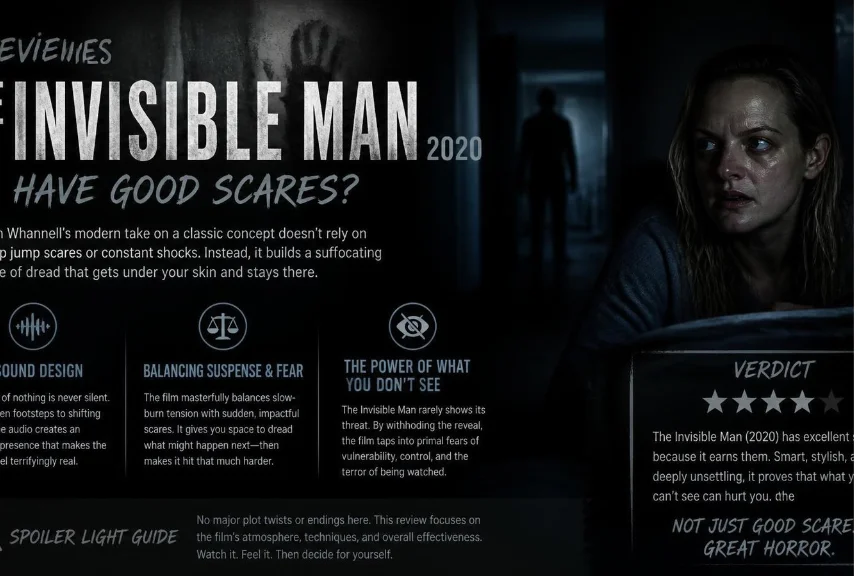
Yes, The Invisible Man (2020) has good scares, especially if creeping tension frightens you more than constant jump scares. Director Leigh Whannell makes empty rooms and quiet spaces feel threatening because the danger could be anywhere. The film saves its sudden shocks for moments when they can have a stronger impact.
That makes the answer to does the invisible man 2020 have good scares a strong yes for suspense fans. Its horror relies heavily on paranoia, stalking, and the fear of an unseen presence. Viewers wanting relentless jump scares may find it slower than expected, but its restraint is part of why its biggest shocks work.
| Scare factor | What to expect |
| Main horror style | Psychological tension, stalking and unseen danger |
| Jump scares | Relatively limited, with several notable shocks |
| Gore | Some strong bloody violence |
| Atmosphere | Tense, quiet and deliberately uncomfortable |
| UK classification | Cinema version classified 15 after cuts |
| Runtime | About 124 minutes |
| Best for | Viewers who prefer suspense over nonstop jump scares |
| Main content concerns | Domestic abuse, threat, violence and disturbing themes |
How Good Are the Scares?
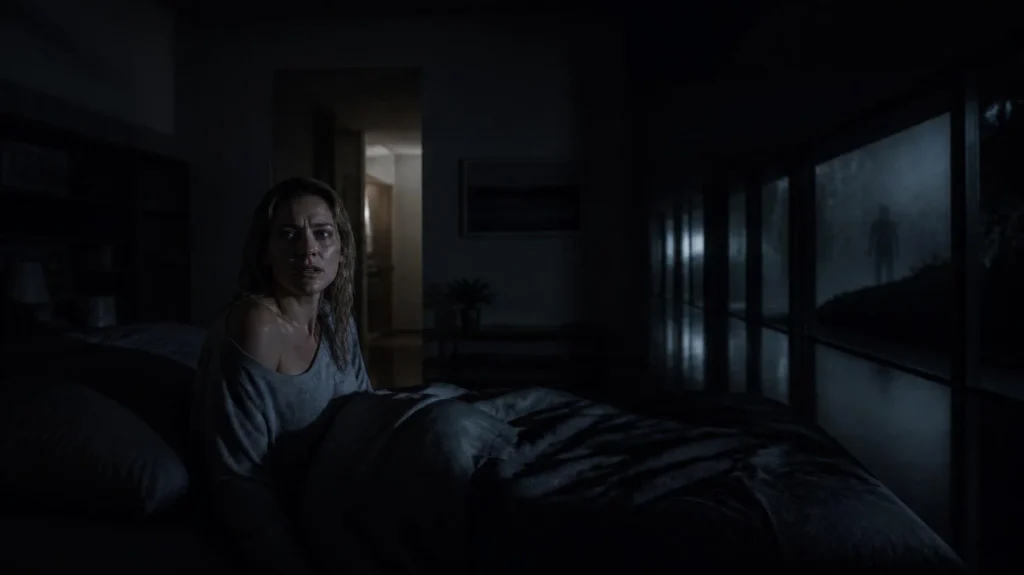
The scares work because the film makes you search every empty corner of the screen for something you cannot see. It builds long periods of tension before releasing them through movement, violence or a sudden shock. There are several jump scares, but suspense and anticipation provide most of the fear.
That approach separates the film from horror movies built around predictable quiet-loud cycles. Leigh Whannell often lets the camera stare into apparently empty areas, encouraging viewers to imagine someone standing there. The empty framing creates tension before the film gives you any clear reason to panic.
Why The Invisible Man’s Scares Work So Well
The central concept behind “Does The Invisible Man 2020 Have Good Scares” gives the filmmakers a simple advantage: you cannot confirm whether a room is empty. A doorway, chair, or blank corner can become suspicious without anything appearing on screen. Your attention starts moving around the frame before Cecilia sees evidence of danger.
That creates fear through anticipation rather than showing a monster. The film deliberately uses empty rooms and corridors to make viewers search for an unseen threat. The technique also connects the visual horror to the story’s themes of manipulation and gaslighting.
Elisabeth Moss’s performance strengthens that approach because much of the fear depends on Cecilia’s reactions. The camera can show almost nothing while her behaviour tells you that something feels wrong. This keeps the viewer focused on small sounds, movements, and suspicious gaps in otherwise ordinary spaces.
Does The Invisible Man 2020 Have Good Scares Without Relying on Jump Scares?
Yes, and this is arguably where the film is most effective. It often stretches suspense for minutes rather than immediately rewarding a tense setup with a loud shock. The film spends considerable time teasing danger before deciding whether anything will happen.
The number of jump scares is low compared with films designed around frequent jolts. Several moments qualify as major sudden scares, while others are smaller shocks or unexpected movements. The wider point is that the movie does not throw a major jump scare at you every few minutes.
This makes the film a useful choice for people who dislike horror built entirely around sudden noises. You will still encounter sharp shocks, so it isn’t jump-scare-free. Most of the experience, though, comes from wondering where the danger is and when it will reveal itself.
What Type of Horror Should You Expect?
The film blends psychological horror, science fiction, and thriller elements. Its story follows Cecilia after she escapes an abusive relationship and begins to suspect her supposedly dead former partner is stalking her. The frightening element is therefore tied to control, isolation, and the difficulty of proving an invisible threat exists.
Psychological pressure matters as much as physical danger throughout the story. Scrollex readers interested in similar combinations of trauma, mystery, and psychological survival horror can also explore the site’s Yellowjackets Season 4 guide. Both stories use fear that extends beyond a straightforward physical threat.
The result feels different from a supernatural ghost story, despite using similar techniques. Doors, hallways, and silent rooms become threatening, yet the story maintains its science-fiction framework. That combination lets the film borrow haunted-house tension without becoming a traditional paranormal movie.
Are the Jump Scares Cheap or Well Earned?
Most of the major scares are supported by tension rather than inserted randomly. The film frequently establishes the possibility of danger long before anything happens. You may know a shock could arrive without knowing whether it will happen now, later, or not at all.
That uncertainty helps the sudden moments land. Silence and careful sound design can make ordinary noises feel threatening before anything frightening appears. The film’s strongest jump scares therefore complement the wider tension rather than replacing it.
There are still conventional loud moments, so viewers who dislike any sudden scares should be prepared. The strongest sequences often work because you have spent time examining an empty frame beforehand. A sudden payoff feels more effective after the film has trained you to distrust silence.
How Intense Is the Violence?
The horror isn’t limited to suspense, and some later scenes become violent. There is visible blood, injury detail, and physical threat during several important sequences. These scenes can feel stronger because much of the earlier film relies on anticipation rather than gore.
UK viewers should also know that the cinema release received a 15 classification after changes were made. Bloody injury detail was reduced for the cinema version to achieve that classification. The content remains unsuitable for younger viewers despite the film’s stronger focus on psychological horror.
Violence becomes more prominent as the story progresses, while the earlier sections lean harder on suspense. That shift means the film’s scare style changes somewhat during its 124-minute runtime. Viewers mainly seeking atmospheric horror may find the opening and middle stretches more unsettling than the action-heavy passages.
Is It Scary If You Watch Lots of Horror Films?
Experienced horror viewers may predict that certain scenes are building towards a scare. Predicting the possibility does not always reveal exactly when or how the payoff will arrive. The invisible antagonist also makes familiar horror framing unusually useful because there may be something present even when the screen appears empty.
The technique works especially well because viewers are encouraged to inspect the background. You start treating furniture, doorways, and unexplained sounds as possible evidence. That participation can keep experienced horror fans involved even when they understand the filmmaking tricks being used.
Fans exploring older genre performances might also enjoy Scrollex’s guide to Amanda Donohoe’s film roles, which includes her cult horror work. Moving between modern psychological horror and older genre films can show how differently filmmakers build tension. The contrast is especially noticeable when comparing visible monsters with an antagonist designed to remain unseen.
Who Will Find The Invisible Man Scariest?
People who fear home invasion, stalking, or unseen threats are likely to find it especially tense. The film repeatedly turns safe-looking domestic spaces into places where danger may already be present. You cannot relax simply because the camera shows an apparently empty room.
It can also hit harder for viewers sensitive to stories about coercive control or abusive relationships. Cecilia’s fear is repeatedly questioned by people around her, adding emotional pressure to the physical threat. Domestic abuse and emotional manipulation are therefore important parts of the viewing experience.
People seeking monsters, elaborate gore, or a rapid sequence of jump scares may respond differently. The film spends significant time establishing dread before becoming more openly violent. Patience with slow-building suspense will make a major difference to how frightening you find it.
Scare Style Compared With Typical Jump-Scare Horror
| Element | The Invisible Man (2020) | Jump-scare-heavy horror |
| Main source of fear | Unseen presence and paranoia | Sudden appearances and loud shocks |
| Scare frequency | More restrained | Often frequent |
| Tension building | Long and deliberate | Often shorter |
| Empty space | Central visual technique | Usually less important |
| Sudden shocks | Limited but impactful | Major recurring device |
| Psychological pressure | High | Varies by film |
This distinction explains why counting jump scares doesn’t capture the film’s full effect. A scene can remain uncomfortable for several minutes without delivering a traditional jump. The camera’s refusal to confirm whether somebody is present becomes a scare technique by itself.
It also means the movie can work for two different horror audiences. Viewers who enjoy sudden shocks still get several memorable moments. Those who prefer sustained anxiety get far more material between those payoffs.
Is The Invisible Man Worth Watching for the Scares?
For suspense-focused horror fans, yes. Its strongest trick is making you afraid of empty space, which sounds simple but proves remarkably effective. The combination of camera placement, sound, and Elisabeth Moss’s performance keeps ordinary rooms uncomfortable.
It is less suitable if your definition of scary requires frequent monsters or constant jump scares. The story spends time on Cecilia’s psychological state and the consequences of abuse. Those dramatic elements are inseparable from how the horror works.
If you prefer tense thrillers that slowly tighten their grip, this should fit comfortably on your watchlist. Scrollex’s coverage of Edward Herrmann movies and TV shows offers another route into genre viewing through The Lost Boys. That film provides a much more visible and playful style of horror than the unseen menace used here.
Final Verdict on the Scares
The film succeeds because it understands that an invisible threat doesn’t need to keep appearing. Whannell makes the audience stare at blank spaces and supply part of the fear themselves. When a sudden scare finally arrives, the preceding tension gives it considerably more force.
For UK horror fans who enjoy slow-burn dread, psychological tension and a handful of effective shocks, it is an easy film to consider. It isn’t a nonstop jump-scare machine, and that restraint is one of its strengths. Go in expecting suspense first and sudden scares second, and its horror style should make much more sense.
Frequently Asked Questions
Does the invisible man 2020 have good scares?
Yes, particularly if you enjoy psychological suspense and carefully timed jump scares. The movie creates fear by making empty spaces seem occupied and dangerous. Its relatively restrained use of sudden shocks helps the bigger moments stand out.
How many jump scares are in The Invisible Man?
Scare trackers differ on the precise total because smaller sudden moments can be classified differently. A reasonable expectation is several jump scares, with only a few functioning as major shocks. The film relies much more heavily on suspense between those moments.
Is The Invisible Man more scary or gory?
It is primarily frightening through tension, threat, and psychological pressure, although it includes bloody violence. The suspense frequently lasts much longer than the violent moments themselves. Viewers sensitive to domestic abuse themes may also find the story emotionally disturbing.
Is The Invisible Man suitable for teenagers in the UK?
The UK cinema release was classified 15 after changes to strong injury detail. That classification does not mean the film will suit every teenager because it includes domestic abuse, threat, and bloody violence. Parents and viewers should consider those themes as well as the age rating.
Does the film get less scary once you know what is happening?
The style changes as the story progresses and the threat becomes more explicit. The early and middle sections place greater emphasis on uncertainty and empty-space suspense. Later sequences contain more direct confrontation, violence, and thriller-style action.