
Understanding Operational Effectiveness
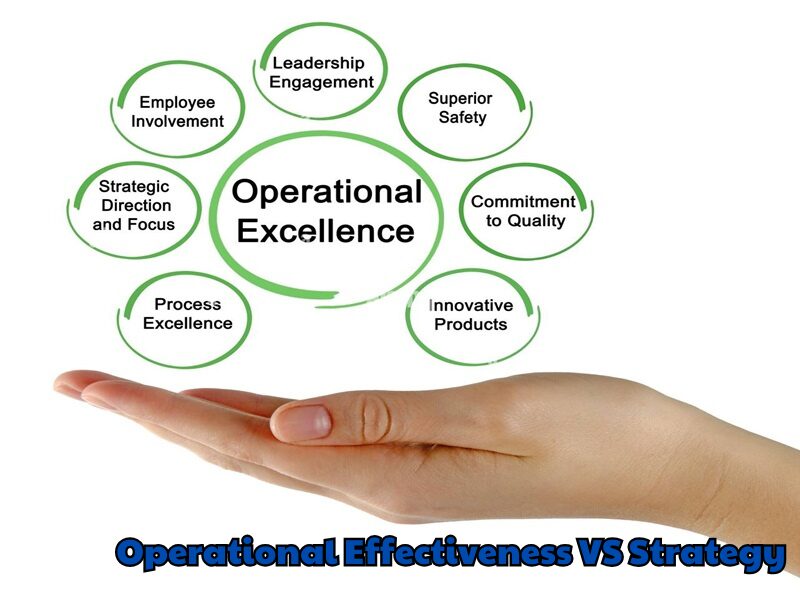
In today’s competitive business environment, companies need more than operational efficiency to achieve sustained success. The comparison of operational effectiveness vs strategy helps in enhancing an organization’s planning and development. The distinction between operational effectiveness and strategy is critical for any organization aiming for peak performance. Operational effectiveness involves refining processes and optimizing tasks, but true market differentiation requires a clear, strategic approach. By understanding the roles and nuances of both operational effectiveness and strategy, businesses can align their goals to foster long-term growth and a sustainable competitive advantage.
| Focus | Enhances internal processes and efficiency |
| Purpose | Improves productivity and reduces costs |
| Scope | Involves daily activities and business practices |
| Example | Just-in-time inventory management |
| Main Goal | Achieving best practices and optimal performance |
| Risk | Can be easily replicated by competitors |
| Key Metric | Operational efficiency and cost savings |
| Market Impact | Limited impact on market position |
| Differentiation | Does not create a unique competitive position |
| Role in Success | Supports strategy by maintaining quality and efficiency |
Distinguishing Operational Effectiveness from Strategic Planning
Understanding the difference between operational effectiveness and strategy is essential for any organization striving for long-term success. Operational effectiveness focuses on doing things better—improving processes, productivity, and efficiency so that current activities are performed in the most effective way possible. Strategy, on the other hand, is about doing the right things—choosing a unique direction or set of choices that positions a company distinctively in its market. While operational improvements can boost performance in the short term, strategic choices define where a business is headed and how it competes against rivals. Recognizing this distinction helps leaders prioritize initiatives that not only optimize daily operations but also support sustainable competitive advantage.
How do Operational Effectiveness and Strategy Differ?
While operational effectiveness focuses on the “how” of running a business, strategy addresses the “what” and “why.” Strategy defines the unique position a business seeks within the market. It considers factors like target customer segments, product differentiation, and the long-term goals that set it apart from competitors. Strategy requires understanding what value the company brings to the market that others don’t and how it plans to maintain this uniqueness over time.
In simple terms, operational effectiveness improves processes, but strategy builds a competitive advantage. A strategy allows businesses to create a distinct brand, while operational effectiveness maintains that brand’s efficiency. Without a strategy, a company risks blending in with competitors, relying solely on process optimizations that can be easily replicated.
Examples of Operational Effectiveness vs. Strategy
One well-known example illustrating the distinction is the airline industry. Southwest Airlines, for instance, operates with a clear strategy of low-cost, no-frills flights targeting budget-conscious travelers. Their operational effectiveness supports this strategy by implementing quick turnaround times and using a single type of aircraft to streamline maintenance and training. Southwest’s strategy and operational effectiveness are aligned, allowing it to carve out a unique position in the airline industry.
In contrast, companies like Continental Airlines tried to emulate the low-cost model with Continental Lite but struggled. They lacked a cohesive strategy supporting operational changes, leading to a fragmented experience for customers who expected a full-service airline. As a result, they failed to capture the low-cost market and suffered financial losses. This example underscores that operational effectiveness without strategy is unlikely to drive sustainable growth.
Why Aligning Operational Effectiveness with Strategy Matters?

A company can achieve a unique, sustainable advantage when operational effectiveness is aligned with strategy. Operational activities should complement the broader strategic goals to enhance the company’s distinctive position. For example, a luxury brand like Rolex focuses its strategy on exclusivity and high-quality craftsmanship.
Its operational effectiveness supports this by investing in top-notch materials, skilled watchmakers, and meticulous quality control. Every operational decision aligns with the brand’s strategy, reinforcing its market position as a luxury watchmaker.
Strategic Convergence: The Pitfall of Misalignment
Strategic convergence occurs when companies focus too much on operational effectiveness at the expense of a differentiated strategy. Over time, businesses within an industry start adopting similar practices, creating a crowded field where no one stands out. The banking industry, for instance, has seen extensive strategic convergence, with many banks offering the same services with minimal differentiation. As a result, customers have limited reasons to choose one bank over another, except for slight differences in fees or customer service.
The Role of Operational Effectiveness in Achieving Strategic Goals

Operational effectiveness plays a supportive role in realizing strategic objectives. It provides the framework for efficiently delivering on the company’s unique value proposition. When managed well, operational effectiveness enables a company to fulfill customer expectations, maintain cost competitiveness, and ensure high-quality standards. However, it should be considered a tool rather than the end goal.
A clear example is Apple’s product strategy, centered on premium design and intuitive technology. Operationally, Apple invests heavily in quality control, supply chain optimization, and supplier relationships to support its strategic position. While competitors might replicate certain operational tactics, Apple’s strategy of combining design, functionality, and exclusivity creates a distinct appeal that’s difficult to copy.
Defining Competitive Advantage Through Strategic Positioning

A competitive advantage is the unique value that a company provides to its customers, which competitors cannot easily replicate. Achieving this requires strategic positioning, where operational effectiveness is used to reinforce a differentiated approach in the market. Strategic positioning involves making trade-offs, such as choosing specific customer segments or prioritizing product quality over cost reductions, to create a distinct brand image.
Competitive advantage isn’t just about being the cheapest or fastest; it’s about offering something that resonates deeply with customers. Nike, for instance, has a strong strategic position based on innovation, performance, and brand identity. While its operational effectiveness ensures streamlined production and distribution, it’s Nike’s strategic choices, such as partnerships with athletes and a focus on design, that maintain its competitive edge.
Creating a Unique Value Proposition with Aligned Goals
A unique value proposition is what makes customers choose your brand over others. To achieve this, companies need to define clear strategic goals that outline the target market, product offerings, and brand message. Operational goals should support this value proposition by ensuring quality, cost-effectiveness, and customer satisfaction.
Businesses can create a unique value proposition by understanding their core strengths and aligning operational practices to amplify those strengths. For instance, Toyota’s lean manufacturing system supports its strategy of reliability and affordability, creating a strong brand associated with durable, high-quality vehicles. Operational practices like continuous improvement (Kaizen) help Toyota maintain its reputation for quality while controlling costs, reinforcing its value proposition.
Strategy vs. Operational Effectiveness: Key Takeaways
The distinction between operational effectiveness and strategy is crucial for businesses seeking long-term growth. Operational effectiveness improves efficiencies but doesn’t create lasting differentiation. Strategy, on the other hand, provides a roadmap for creating a unique market position.
- Operational Effectiveness Enhances Efficiency: It focuses on refining processes and reducing costs but doesn’t guarantee a competitive edge.
- Strategy Defines Market Position: It provides a framework for what sets the business apart, guiding decisions that create long-term value.
- Aligning the Two Leads to Success: When operational effectiveness supports strategic goals, companies can maintain a strong competitive position that is difficult to replicate.
In today’s dynamic market, businesses must find the right balance between operational efficiency and strategic direction to build a sustainable competitive advantage. Operational effectiveness without strategy risks turning a business into a commodity.
Read More: –Types of Consulting: A Comprehensive Overview, Management, Operation, And Much More
Conclusion
Balancing operational effectiveness with a distinct strategy is essential for businesses to thrive and avoid strategic convergence. While operational effectiveness ensures efficient and cost-effective operations, it is strategy that establishes a company’s unique position in the market. When both are aligned, companies can create a competitive advantage that is not only sustainable but also difficult for competitors to replicate.
Thank you for taking your interest in reading this article, do you want to know more about “Sustainable Competitive Advantage“, then explore our “Business” category.
Frequently Asked Questions (FAQs)
Operational effectiveness drives you closer to the productivity frontier, representing the peak of best practices, while your strategic positioning determines your business’s specific place along that frontier.
Operational effectiveness focuses on excelling in specific tasks or functions, whereas strategy involves coordinating these activities into a cohesive whole.
Strategic planning enhances operational efficiency by offering a clear roadmap for all actions. It minimizes uncertainty, fosters alignment, and ensures that all efforts work in harmony.
Business strategy involves making unique choices about where and how a company competes to achieve long-term success.
Operational effectiveness refers to performing similar activities better than competitors by improving efficiency, quality, speed, and productivity.