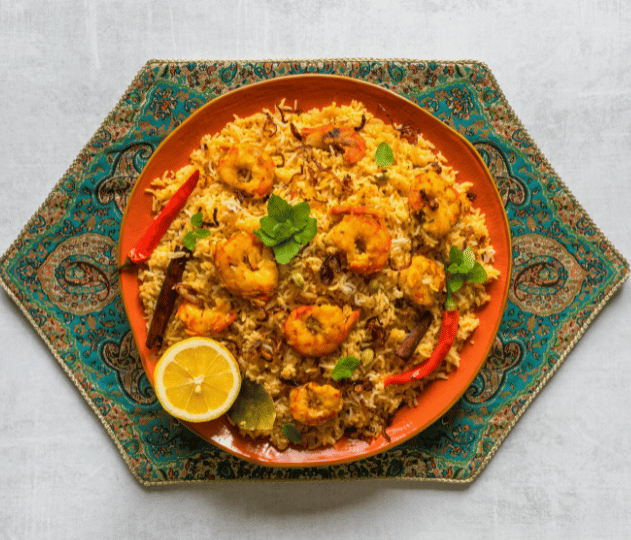
Prawn Biryani is a celebration of flavors, textures, and aromas that captures the essence of Indian coastal and Mughlai culinary traditions. This exquisite dish features plump, juicy prawns that are marinated in a fragrant mixture of yogurt, spices, and sometimes a hint of citrus, ensuring they remain tender while absorbing the marinade’s vibrant flavors.
Each grain of basmati rice is treated with care, parboiled with whole spices such as cardamom, bay leaves, and cinnamon to retain its individuality and fragrance. Layer assembly is an art, with alternating tiers of rice and spiced prawns, enriched with fried onions and fresh herbs.
Slow-cooked over low heat, the biryani allows the masala to seep into the rice, producing a balanced mix of heat, umami, and subtle sweetness, while the ghee adds a luxurious, silky finish. It is more than just a meal; it is an experience, a dish that embodies the richness of Indian spices.
| Category | Details |
| Dish Name | Prawn Biryani |
| Main Ingredients | Fresh prawns, long-grain basmati rice, yogurt, tomatoes, fried onions, whole and ground spices, ghee |
| Flavor Profile | Savory, spicy, slightly tangy, aromatic with subtle sweetness from prawns |
| Texture | Juicy, tender prawns; fluffy, separate rice grains; layered and rich |
| Cooking Method | Marination of prawns → Parboiling rice → Preparing masala → Layering → Dum (slow steaming) |
| Regional Variations | Kerala (coconut milk, curry leaves), Bengali (mustard oil, poppy seeds, slight sweetness), Hyderabadi (rich, aromatic, fully cooked on dum), Quick version (pre-cooked prawns & spice mixes) |
| Aromatics & Herbs | Fried onions, garlic-ginger paste, coriander, mint, green chilies, saffron milk |
| Cultural Significance | Coastal Indian culinary tradition, served during festivals, weddings, and celebrations |
| Nutritional Highlights | High protein (prawns), moderate carbs (rice), healthy fats (ghee), rich in vitamins and minerals like B12, selenium, antioxidants |
| Serving Suggestions | Raita, kachumber salad, lemon wedges, garnished with fried onions, coriander, mint, cashews, or raisins |
| Cooking Tips | Use fresh prawns, avoid overcooking, parboil rice, layer gently, cook on low heat for dum |
Prawn Biryani
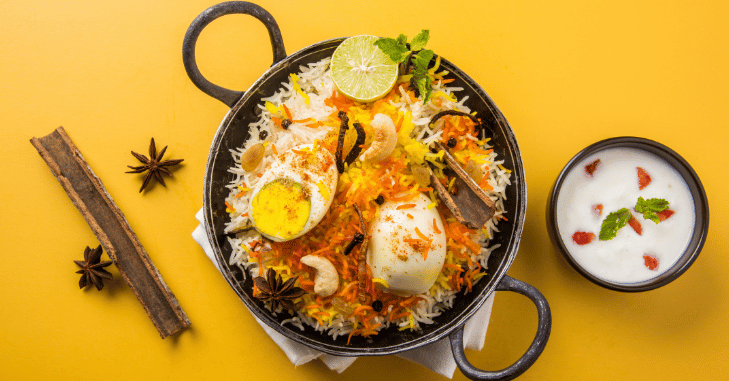
Prawn Biryani is a luxurious and aromatic Indian dish that masterfully combines succulent prawns with fragrant, long-grain basmati rice and a symphony of spices. The prawns, fresh and tender, are marinated in a blend of yogurt, turmeric, chili, and other spices, which not only infuses them with flavor but also helps maintain their delicate texture during cooking.
The rice, usually parboiled with whole spices such as cardamom, cloves, and cinnamon, forms a fragrant base that absorbs the prawn masala’s flavors during slow cooking. Layers of rice and prawn masala are carefully assembled in a heavy-bottomed pot or traditional biryani handi, interspersed with fried onions, fresh coriander, and mint leaves, creating a harmonious layering of textures and aromas.
Saffron-infused milk is drizzled on top, imparting a golden hue and a subtle floral fragrance, while a gentle “dum” on low heat allows the spices and aromatics to meld. The result is a visually stunning dish, with each bite delivering a balanced mix of savory, spicy, and slightly tangy flavors, complemented by the richness of ghee.
Origins and Cultural Significance
Biryani has deep roots in Mughal cuisine and South Indian culinary traditions. While meat-based biryanis, such as chicken and mutton, are more commonly known, this coastal variant takes advantage of the fresh seafood available in regions like Kerala, Bengal, and the coastal districts of Maharashtra.
- Cultural importance: Prawn biryani is often served during festivals, weddings, and special occasions, symbolizing celebration and hospitality.
- Regional variations: Kerala biryani uses coconut milk and curry leaves, giving it a distinct South Indian flavor, while Bengali prawn biryani often incorporates mustard oil and subtle sweetness for balance.
Key Ingredients of Prawn Biryani
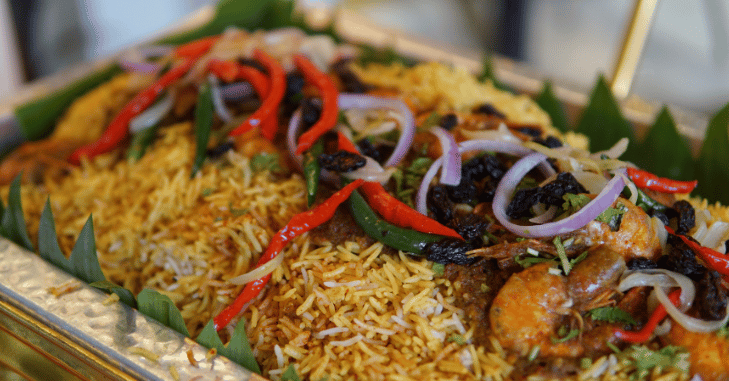
1. Prawns
- Use fresh, firm, medium-sized prawns for the best texture and flavor.
- Clean and devein the prawns thoroughly before cooking.
- Marinate prawns in a blend of spices to infuse flavor.
- Prawns cook very quickly, so careful timing is essential.
- Avoid overcooking to prevent the prawns from becoming rubbery.
2. Basmati Rice
- Use long-grain basmati rice for its fragrant aroma and fluffy, non-sticky texture.
- Rinse the rice thoroughly to remove excess starch before cooking.
- Parboil or partially cook the rice until it is about 70% done.
- Ensure the rice grains remain separate to achieve perfect layering in the biryani.
- Partially cooking the rice allows it to finish cooking while absorbing the prawn and masala flavors.
3. Spices
- Whole spices: Cinnamon, cloves, cardamom, star anise, bay leaves
- Ground spices: Turmeric, red chili powder, coriander, cumin, garam masala
- Optional aromatics: Saffron strands soaked in warm milk or rose water for fragrance
4. Herbs and Aromatics
- Onions: Thinly sliced and fried until golden brown for sweetness and texture
- Garlic and ginger paste: Adds pungency and depth
- Fresh coriander and mint leaves: Provide freshness and a vibrant aroma
- Green chilies: For a mild to moderate heat
5. Yogurt and Tomatoes
- Yogurt is added to tenderize the prawns and impart a creamy texture to the masala.
- Tomatoes provide a mild acidity that balances the richness and spiciness of the dish.
- Both ingredients help create a well-rounded, flavorful masala base.
- Yogurt also helps the spices adhere better to the prawns.
- Tomatoes break down during cooking, adding body and moisture to the masala.
6. Ghee or Oil
- Ghee is used for its rich, nutty flavor that enhances the overall taste of the biryani.
- Its aromatic quality adds depth and a festive, indulgent touch to the dish.
- Ghee helps in lightly frying spices, onions, and other ingredients, releasing their full flavors.
- It creates a glossy, appealing finish on the rice and masala layers.
- Using ghee instead of regular oil enhances the traditional, authentic biryani experience.
Preparation Method
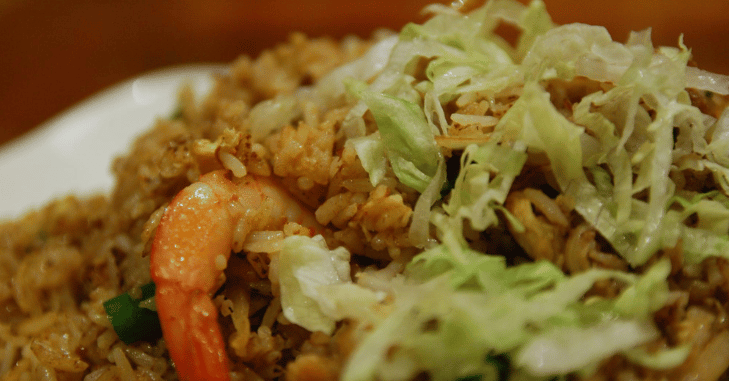
Step 1: Marination
Prawns are marinated with yogurt, turmeric, red chili powder, coriander powder, ginger-garlic paste, salt, and a dash of lemon juice. Marination time ranges from 20 minutes to an hour, depending on preference.
Step 2: Rice Preparation
Basmati rice is first rinsed thoroughly under cold water to remove excess starch, which helps keep the grains separate and prevents them from becoming sticky. After rinsing, the rice is parboiled in lightly salted water along with whole spices such as bay leaves, cloves, cardamom, and cinnamon.
Step 3: Preparing the Masala
Fried onions, garlic, ginger, green chilies, tomatoes, and whole spices are sautéed together to create a rich masala base. The marinated prawns are then added and cooked just until they turn pink and slightly firm.
Step 4: Layering the Biryani
In a heavy-bottomed pot or a traditional biryani handi, the biryani is assembled in layers to build a harmonious blend of flavors and textures. First, a layer of partially cooked basmati rice is spread evenly at the bottom, followed by a generous layer of the flavorful prawn masala.
Step 5: Dum Cooking (Steaming)
The pot is sealed with a tight lid or dough to trap steam. It is then cooked on low heat for 15–20 minutes (or sometimes in a preheated oven), allowing flavors to meld. The result is perfectly cooked rice with succulent prawns, each grain infused with the masala.
Serving Suggestions
- Accompaniments: It pairs well with cooling sides like raita (yogurt with cucumber and mint), kachumber salad, or lemon wedges.
- Presentation: Garnish with fried onions, coriander, mint, and sometimes cashew nuts or raisins for an added touch of richness.
- Occasions: Ideal for parties, festive occasions, and seafood-themed meals.
Nutritional Highlights
| Component | Details |
| Protein | High, from prawns |
| Carbohydrates | Moderate, mainly from basmati rice |
| Healthy Fats | Present in ghee or oil used |
| Vitamins & Minerals | Rich in iodine, vitamin B12, selenium, and antioxidants from herbs and spices |
| Calories | Varies with preparation, deep-frying onions and using ghee increases calorie content |
Health Benefits of Prawn Biryani
Beyond its rich taste and irresistible aroma, prawn biryani also offers several nutritional benefits. Prawns are an excellent source of lean protein, omega-3 fatty acids, and essential nutrients like vitamin B12, selenium, and iodine, which support brain function, heart health, and metabolism.
When paired with basmati rice, fresh herbs, and spices such as turmeric, cinnamon, and cloves, the dish becomes not only flavorful but also rich in antioxidants and anti-inflammatory properties. Although biryani is often considered indulgent, a balanced portion can provide energy, protein, and important minerals, making it both satisfying and nourishing.
Variations of Prawn Biryani
It comes in a variety of regional styles, each with its own unique flavors and techniques. Kerala-style prawn biryani is known for its use of coconut milk, fresh curry leaves, and a mild spice blend, creating a rich yet gentle taste that highlights the sweetness of the prawns.
Bengali-style biryani incorporates mustard oil, poppy seeds, and sometimes a touch of sugar, offering a subtle sweetness and a distinctive aromatic profile. In contrast, Hyderabadi-style prawn biryani is rich, intensely aromatic, and spicy, often cooked entirely on dump to allow the layers of rice and prawn masala to infuse deeply with flavor.
For those short on time, a quick biryani version uses pre-cooked prawns and ready-made spice mixes, delivering a simplified yet satisfying taste without compromising on the essence of the dish.
Differences Between Prawn Biryani and Other Biryani Varieties
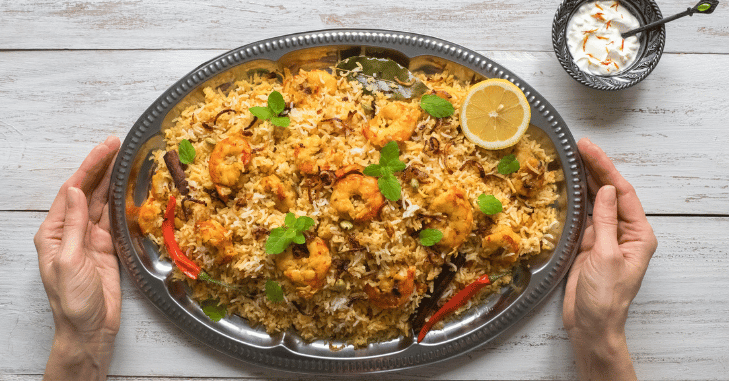
- Prawns cook faster than chicken or mutton, requiring shorter cooking times to avoid overcooking.
- Seafood flavor adds a subtle sweetness that balances the masala’s spiciness.
- Coastal regions often incorporate local ingredients like coconut milk, curry leaves, or mustard oil, giving them a distinct regional signature.
Tips for the Perfect Biryani
For the best biryani, always use fresh prawns rather than frozen ones, as they provide a firmer texture and more delicate seafood flavor. It’s important not to overcook the prawns during the masala preparation; they should remain tender and juicy to complement the rice perfectly.
When layering the rice and prawn masala, do so gently to preserve the grains’ integrity and maintain the biryani’s visual appeal. Finally, cook the biryani on low heat during the dum process, allowing the flavors to meld beautifully without burning the bottom, ensuring a perfectly aromatic and balanced dish.
Why Prawn Biryani is Loved Worldwide?
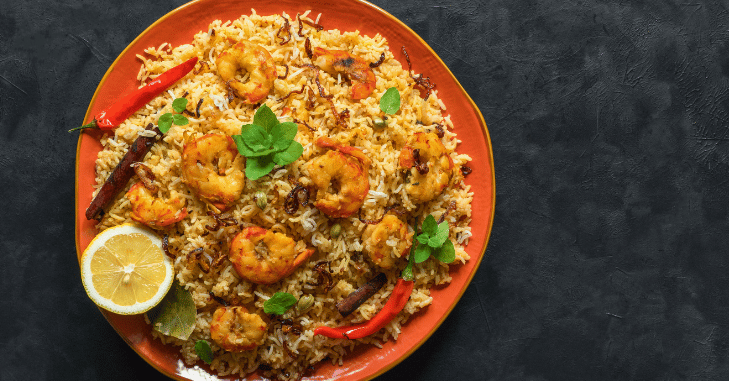
It has transcended regional boundaries due to its balanced blend of spices, aroma, and texture. It combines:
- Juicy, succulent seafood
- Aromatic, flavorful rice
- Layered spices and herbs
- A festive and elegant presentation
- Whether at a coastal festival in India or on a restaurant menu overseas, biryani continues to be a favorite among seafood lovers and biryani enthusiasts alike.
Conclusion
In conclusion, prawn biryani is far more than just a dish; it is a culinary masterpiece that reflects India’s rich gastronomic heritage. Each bite offers a symphony of textures and flavors, from the tender, juicy prawns infused with aromatic spices to the fluffy, fragrant basmati rice layered with fried onions, fresh herbs, and subtle saffron notes.
The careful layering and slow “dum” cooking allow the masala to permeate every grain of rice, creating a harmonious balance of heat, umami, and gentle sweetness. Regional variations, from the coconut-infused Kerala style to the mustard-scented Bengali version and the intensely aromatic Hyderabadi preparation, highlight the adaptability and depth of this beloved dish.
If you want to read an interesting article about it, explore our Food category.
FAQs
It uses fresh seafood instead of chicken or mutton, giving it a subtle sweetness. Coastal ingredients like coconut milk, mustard oil, or curry leaves also create unique regional flavors.
Marinate the prawns in yogurt and spices, and cook them just until pink while preparing the masala. Avoid overcooking prawns, as they cook quickly and can become rubbery.
Long-grain basmati rice is ideal because of its fragrance and ability to remain fluffy and separate, absorbing the flavors of the masala without becoming sticky.
Whole spices like cardamom, cloves, cinnamon, and bay leaves, along with ground spices like turmeric, red chili, coriander, and garam masala, are key. Fresh herbs, fried onions, garlic, ginger, and saffron milk enhance aroma and flavor.
Yes. You can use pre-cooked prawns and ready-made spice mixes to reduce cooking time while maintaining the dish’s essence and flavor.
Cooling sides like cucumber-mint raita, kachumber salad, and lemon wedges complement the rich flavors. Garnishes like fried onions, coriander, mint, cashews, or raisins add visual appeal and texture.