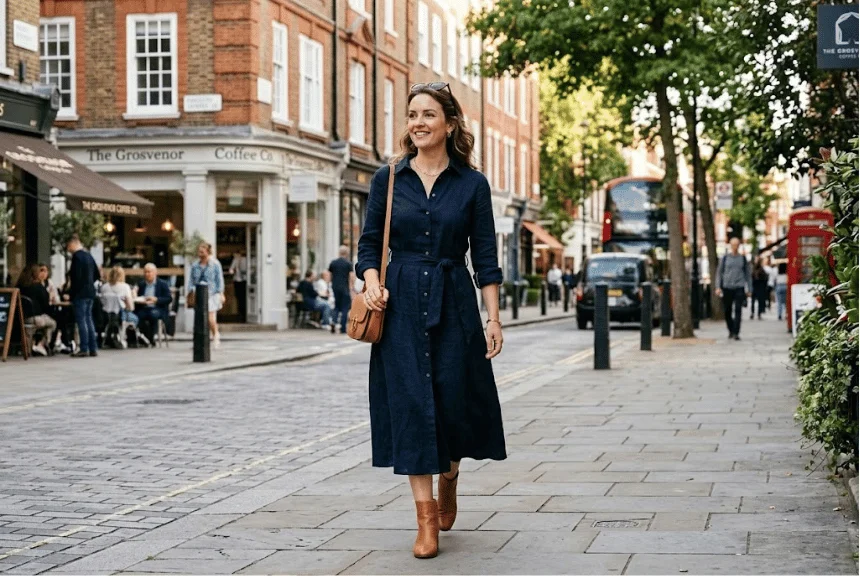
A shirt dress for women combines the neat structure of a button-down shirt with the comfort of a dress. It can work for offices, weekends, holidays, lunches, and smart-casual occasions. The right length, fabric, fit, and accessories can make one dress useful throughout much of the year. Also worth reading: Black Trainers Women Can Wear Everywhere.
| What to consider | Good options | Best suited to |
|---|---|---|
| Length | Mini, midi, maxi | Different occasions and coverage preferences |
| Fabric | Cotton, linen, denim, satin | Seasonal comfort and formality |
| Fit | Relaxed, straight, belted | Personal style and preferred silhouette |
| Shoes | Trainers, loafers, boots, heels | Casual through to dressier outfits |
| Layers | Cardigan, blazer, coat | Changing UK weather |
| Details | Belt, pockets, collar, buttons | Practicality and styling flexibility |
Quick answer: A shirt dress offers an adaptable option for British wardrobes because you can change its look through footwear, belts, layers, and accessories. Choose breathable cotton or linen for warmer weather, heavier fabrics for cooler months, and a midi length for maximum versatility. Elsewhere on the site: Lace Shorts in the UK.
Why Shirt Dresses Work So Well
The design takes familiar details from traditional shirts, including collars, cuffs, buttons, and structured shoulders. Those features can make even a relaxed design appear more polished. The dress shape removes the need to coordinate separate tops and bottoms.
Versatility is another useful advantage for changing schedules and unpredictable British weather. A lightweight design can stand alone during warmer days, then work under knitwear or a coat later. Changing footwear can also move the same outfit between casual and smarter settings.
Current UK retailers stock everything from relaxed mini designs to structured midi and flowing maxi options. Cotton, denim, satin, linen blends, prints, and belted silhouettes are widely represented. This variety makes the style suitable for different tastes rather than one specific fashion aesthetic.
Choosing the Right Shirt Dress for Women
Length is one of the first decisions because it affects both appearance and practicality. Mini versions create a relaxed, youthful look, while midi designs provide more coverage. Maxi styles offer a longer silhouette that can suit holidays, evenings, or casual daytime outfits.
Consider where you expect to wear the dress before choosing its length. A midi version often moves easily between an office, lunch, and an evening meal. A shorter style may suit casual weekends, while a maxi can provide extra coverage and visual impact.
Before buying, check how the dress fits across your shoulders, bust, and button placket. Buttons should sit smoothly, not pull or create gaps. You should also have enough room to sit, walk, and move your arms comfortably.
Mini, Midi or Maxi: Which Length Should You Choose?
| Length | Main advantages | Styling ideas | Useful for |
|---|---|---|---|
| Mini | Light and casual | Trainers, flats, ankle boots | Weekends and warmer days |
| Midi | Balanced and versatile | Loafers, boots, heels | Work and smart-casual plans |
| Maxi | More coverage | Sandals, boots, heeled shoes | Holidays, evenings and transitional weather |
A midi shirt dress is often the easiest starting point when versatility matters most. The extra coverage suits professional environments while staying relaxed enough for weekends. Add a belt for more waist definition.
Mini dresses can work well with tights and boots once temperatures drop. Maxi designs can also transition between seasons with thoughtful layering. Your preferred proportions matter more than following a fixed rule about height or body shape.
Pick a Fabric That Matches the Season

Cotton is a practical choice for everyday wear because it feels familiar and works across many styles. Crisp cotton creates a sharper look, while softer weaves feel more relaxed. Check the care label because fabric blends can change washing and ironing requirements.
Linen and linen blends work well in warm weather because their lighter construction suits summer dressing. Natural creasing is part of linen’s character, so consider whether you like that appearance. A blend may be preferable if you want fewer visible creases.
Denim adds weight and creates an easy, casual outfit. Satin offers a dressier finish that can suit dinners or evening events. During autumn and winter, heavier woven fabrics can work better with tights, boots, knitwear, and coats.
How to Style a Shirt Dress for Everyday Wear
For an easy daytime outfit, pair a relaxed dress with trainers or flats. Keep accessories simple and roll the sleeves when the weather allows. A crossbody bag can finish the outfit without making it feel overly formal.
A belt changes the silhouette without requiring a different dress. Use the matching fabric belt for a coordinated finish or choose leather for contrast. You can leave the dress unbelted when you prefer a looser shape.
Some button-through designs can also work as lightweight outer layers. Wear one open over a simple top and trousers when its cut allows. This approach gives longer designs another purpose during transitional weather.
Wearing a Shirt Dress to Work
A midi design can be particularly useful for workplaces with smart-casual dress codes. Look for clean lines, comfortable coverage, and fabric that keeps its shape. Navy, black, beige, stripes, and understated prints can all work depending on your workplace.
Loafers, pointed flats, ankle boots, or low heels can create a polished finish. Add a blazer when the setting calls for more structure. A cardigan provides a softer alternative for less formal workplaces.
Check button placement before wearing the dress for a full workday. Sit down and move around when trying it on. This quick check helps reveal pulling, restrictive sleeves, or an uncomfortable hem before you commit.
How to Wear One Through Different UK Seasons
Spring weather often changes throughout the day, so removable layers are useful. Pair a midi design with a cardigan, light jacket, or trench coat. Trainers and ankle boots both work when temperatures remain unpredictable.
During summer, lighter cotton and linen styles can keep an outfit simple. Flat sandals, trainers, and minimal accessories help keep the look easy during the day. Check fabric opacity in bright daylight, especially with white and pale colours.
Autumn gives denim and heavier cotton designs more room to shine. Add ankle boots, a cardigan, and a structured coat as temperatures fall. Darker colours can work well, but seasonal dressing doesn’t require abandoning brighter shades.
Winter styling usually requires more insulation beneath and over the dress. Tights, boots, knitwear, and a warm coat can extend its useful season. Choose enough room in the original fit if you plan to layer underneath.
Shoes That Work With Shirt Dresses
Trainers are one of the simplest ways to create a relaxed daytime outfit. They pair particularly well with denim, cotton, and oversized styles. Clean, understated designs keep the outfit easy to coordinate.
Loafers and pointed flats can sharpen a midi dress without adding much height. Boots are useful during colder UK months and work with several lengths. Check where the boot ends against the hem to find proportions you like.
Heeled sandals, block heels, or mules can make the same dress feel more evening-ready. Fabric also affects the result, since satin naturally looks dressier than denim. Changing shoes is often enough to give a familiar dress a different purpose.
Finding a Fit You Feel Comfortable Wearing
No single shirt-dress shape suits every woman. Straight designs create a clean line, while belted options add definition at the waist. Oversized cuts offer extra room and can create a deliberately relaxed look.
Focus first on areas that affect comfort, especially the shoulders, bust, sleeves, and button fastening. A flattering garment still needs to let you move naturally. Always use the retailer’s measurements rather than assuming one UK size fits identically across brands.
Also consider your preferred level of structure. Crisp fabrics can hold a stronger silhouette, while softer materials drape closer to the body. Neither option is automatically better because the right choice depends on the result you want.
A Simple Buying Checklist
Before ordering, compare the product measurements with a dress you already enjoy wearing. Check the fabric composition and care instructions rather than judging the garment from photographs alone. Check whether a belt is included or sold separately.
Consider these points before making your choice:
- Decide whether mini, midi, or maxi suits your intended use.
- Check bust, waist, hip, sleeve, and overall length measurements.
- Choose a fabric appropriate for the season.
- Look at washing and ironing requirements.
- Check whether the fabric needs a slip or extra layer.
- Consider which shoes and coats you already own.
- Review the retailer’s current returns policy before ordering.
This approach can help you choose clothing that works with your existing wardrobe. It also shifts attention from short-lived styling ideas towards practical wear. A versatile purchase should give you several realistic outfit combinations.
Frequently Asked Questions
What is a shirt dress for women?
A shirt dress for women is a dress inspired by classic shirt construction. Common details include a collar, front buttons, cuffs, and a structured or relaxed body. Designs range from short casual versions to tailored midi and flowing maxi styles.
Can you wear a shirt dress to work?
Yes, it can suit many smart-casual workplaces when the cut and styling match the dress code. Midi lengths, structured fabrics, loafers, and blazers can create a more professional appearance. Workplace expectations vary, so use your employer’s dress policy as the final guide.
What shoes look good with a shirt dress?
Trainers, sandals, loafers, flats, boots, and heels can all work with this style. Choose footwear according to the dress length, weather, and occasion. Trainers create a casual result, while loafers or heels can make the outfit appear smarter.
Are shirt dresses suitable for winter?
They can work in winter when the fabric and layering provide enough warmth. Try tights, boots, knitwear, and a suitable winter coat with heavier designs. Thin summer fabrics may need more substantial layers during colder weather.
Should you wear a shirt dress with a belt?
A belt is optional and mainly changes the outfit’s shape. Belted styling creates stronger waist definition, while an unbelted dress gives a straighter or looser silhouette. Try both approaches before deciding which feels more comfortable.
Build More Outfits From One Dress
A good shirt dress earns its place by working with clothes and accessories you already own. Before buying another item, picture the dress with three pairs of shoes and two outer layers. That simple test can reveal whether it will become useful or remain difficult to style.
For more lifestyle guides and practical ideas, visit Scrollex home page. The site publishes accessible articles across a range of lifestyle-focused subjects. Building a wardrobe around adaptable pieces can make everyday dressing simpler throughout changing British seasons.