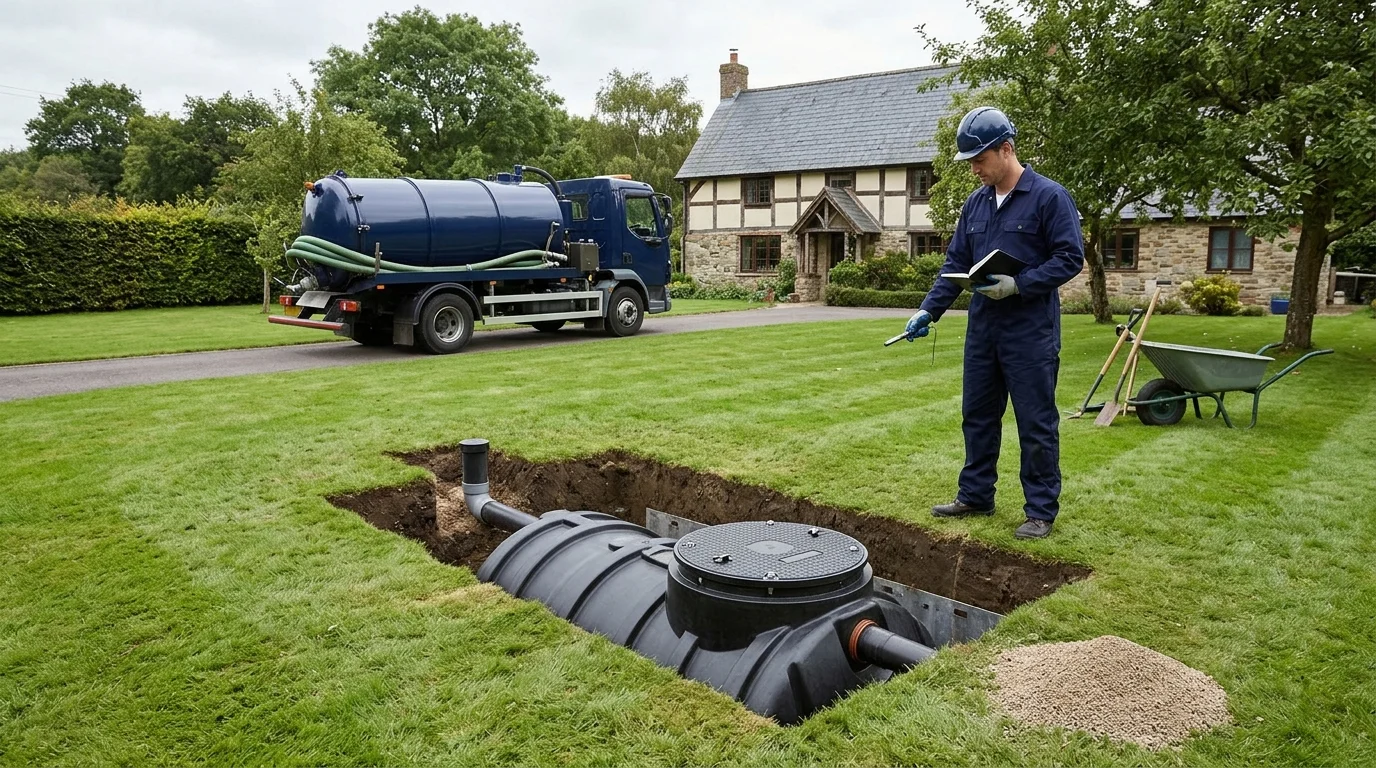
A cesspit is a sealed underground tank that stores household sewage without treating or discharging it. It is mainly used where a property cannot connect to the mains sewer. An authorised waste carrier must empty the tank before it becomes full. Unlike a septic tank, the system has no outlet for treated liquid. Everything entering the tank remains there until collection. That simple difference has major effects on maintenance, running costs, and legal responsibilities.
| Key point | What UK homeowners should know |
|---|---|
| Main purpose | Stores sewage from properties without suitable mains drainage |
| Treatment | None |
| Outlet | No normal discharge outlet |
| Emptying | Required regularly |
| England minimum size | 18,000 litres for two users |
| Extra capacity | 6,800 litres for each additional user |
| Main risk | Leaks, overflow, pollution, and high emptying costs |
| Emptying contractor | Use a registered waste carrier |
| Permit in England | Usually unnecessary unless the Environment Agency requires one |
| Scotland | Cesspits are not permitted |
Key Takeaways
* A sealed sewage holding tank stores waste rather than treating it. * Regular professional emptying is essential because nothing leaves through a drainage field. * English guidance requires at least 18,000 litres for two users when installing a new system. * Capacity must increase by 6,800 litres for each additional user. * Owners must prevent leaks, overflow, pollution, and unsafe access. * Running costs can exceed those of septic tanks because every litre requires removal. * Rules differ between England, Wales, Scotland, and Northern Ireland. * A professional drainage assessment is sensible before installing or replacing any off-mains system.
What Is a Cesspit and How Does It Work?
A cesspit receives sewage and wastewater through the property’s foul drainage pipes. The waste enters a watertight underground chamber and stays there. Normal operation includes no biological treatment or controlled environmental discharge. That makes the system different from most other off-mains drainage options. A septic tank separates solids before liquid enters a suitable drainage field. A sewage treatment plant treats wastewater more thoroughly before an approved discharge. A sealed tank instead works like a large temporary storage vessel. Its usable capacity steadily falls as toilets, sinks, showers, and appliances add wastewater. A tanker must remove the contents once the tank approaches its safe operating limit. Quick answer: A cesspool is a watertight sewage storage tank with no treatment process or discharge outlet. Wastewater stays inside until a registered contractor pumps it out. It suits some properties without mains drainage, but frequent emptying can make its long-term running costs much higher than other systems.
Why Would a UK Property Use One?
Most households would normally connect to a public foul sewer when a suitable connection is available. Rural properties sometimes have no practical connection because the sewer network is too distant. Ground conditions may also make other private drainage options unsuitable. A septic system needs an appropriate drainage field for liquid effluent. Poorly draining land, limited space, or environmental restrictions can prevent that arrangement. A sealed holding system may then become one possible solution. It is generally worth assessing alternatives before installation. Regular tanker collections create an ongoing expense that other systems may avoid. A specialist can assess land, access, soil, and local regulatory requirements before recommending an option. Homeowners researching an older rural property may also find Scrollex’s guide to finding when a house was built useful. Older properties often have drainage systems installed or changed at different times. Establishing the property’s history can help when reviewing existing services.
UK Rules You Need to Understand
Rules depend on which UK nation the property is in. England has specific Environment Agency guidance covering private sewage systems. Wales, Scotland, and Northern Ireland operate separate regulatory arrangements. In England, the Environment Agency states that a functioning cesspool should not discharge sewage into the environment. Owners must maintain it and prevent leakage or overflow. Owners should use a registered waste carrier for regular emptying. The Environment Agency says its general binding rules for small sewage discharges do not apply to these sealed tanks. A permit is normally unnecessary unless the agency specifically requires one. Pollution caused by a leaking or overflowing system can still lead to enforcement action. You can check current requirements in the official GOV.UK guidance for properties with a cesspool.UK guidance for properties with a cesspool. Rules can change, so official guidance should take priority over older advice. Local planning and building-control requirements may also apply. Scotland requires particular care because the rules differ significantly. NetRegs states that cesspools are not allowed in Scotland. Scottish property owners should seek advice about permitted wastewater alternatives instead.
What Size Tank Do You Need in England?
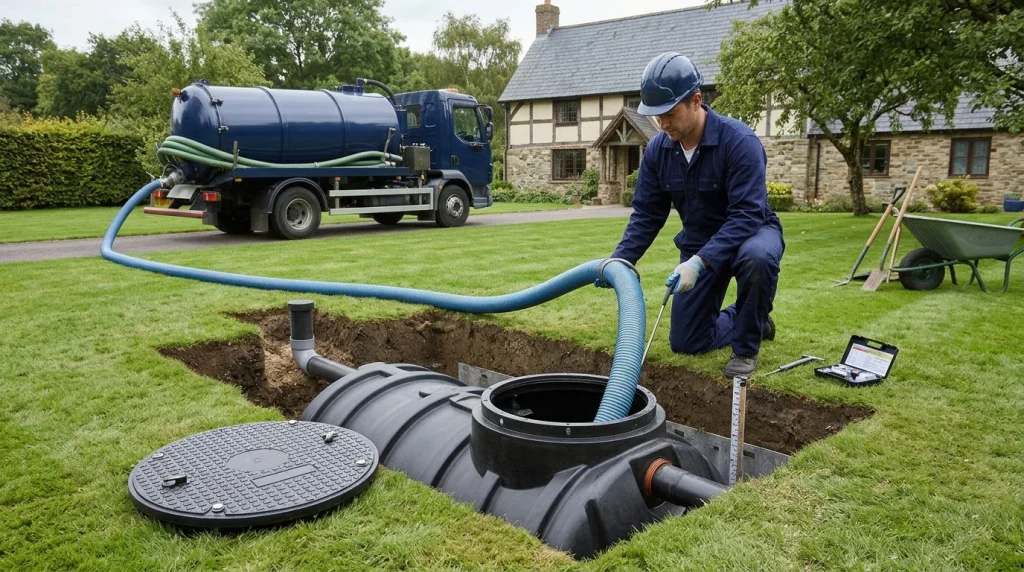
Current GOV.UK guidance states a minimum capacity of 18,000 litres for two users when installing a new system. The required capacity rises by 6,800 litres for every additional user. This means household size can produce a surprisingly large storage requirement. For example, a four-person household would need 31,600 litres under that calculation. Two additional residents add 13,600 litres to the 18,000-litre starting capacity. Site conditions and building-control requirements still need professional assessment. Approved Document H also contains guidance concerning construction, siting, ventilation, and tanker access. The tank must prevent leakage and unwanted groundwater entry. Access must allow safe emptying and cleaning.
How Often Does a Cesspool Need Emptying?
No single emptying interval suits every household. Tank capacity, occupancy, water consumption, and visitor numbers all affect how quickly it fills. A larger family can fill the same tank much faster than a household with one or two occupants. GOV.UK gives monthly emptying as an example of regular maintenance in England. Some systems may require different intervals based on their capacity and actual use. Owners should monitor levels rather than relying entirely on a fixed calendar. A high-level alarm can give useful warning before capacity becomes critical. The alarm should support routine checks, not replace them. Waiting until drains back up or sewage appears outside creates unnecessary health and pollution risks. Keeping a record of collection dates can reveal your property’s normal pattern. Unexpectedly faster filling may suggest increased water use or unwanted water entering the tank. A drainage contractor can investigate significant changes.
How Much Does Emptying Cost?
There is no standard nationwide price for tanker collection. Charges vary with tank volume, location, contractor, travel distance, and site access. Emergency or difficult collections can cost more than planned visits. The bigger issue is annual cost rather than a single-visit fee. A system needing frequent collection can generate substantial recurring expenditure. This is why operating costs should be considered before choosing sealed storage for a permanent home. Reducing unnecessary water entering the foul drainage system can help control filling rates. Rainwater should not be deliberately routed into the sewage tank. Leaking toilets or taps can also add large amounts of avoidable wastewater. Knowing your home’s main water controls can help when dealing with plumbing problems. Scrollex explains how to find and operate the main stopcock in a UK home. Fixing persistent water leaks can reduce waste and prevent unnecessary tank filling.
Cesspool vs Septic Tank vs Sewage Treatment Plant
These systems may all serve properties outside the mains sewer network. Their internal processes and discharge arrangements are different. Choosing between them requires more than comparing installation prices.
| Feature | Sealed holding tank | Septic tank | Sewage treatment plant |
|---|---|---|---|
| Stores sewage | Yes | Partly | Partly |
| Treats wastewater | No | Basic settlement | Yes |
| Normal liquid discharge | No | To suitable drainage field | Approved discharge arrangement |
| Needs tanker emptying | Frequently | Periodically | Periodically |
| Electricity | Usually no | Usually no | Often yes |
| Running cost concern | Frequent collections | Maintenance and desludging | Power, servicing, and desludging |
| Best suited to | Sites where discharge options are unsuitable | Suitable soil and drainage field | Sites needing higher treatment quality |
A septic tank does not simply store everything indefinitely. Solids settle inside while liquid leaves through an appropriate drainage field. That reduces the volume requiring tanker removal compared with sealed storage. A package treatment plant goes further by actively treating wastewater. It usually needs power, servicing, and routine maintenance. The right choice depends on the property, discharge options, ground conditions, and regulatory requirements.
Warning Signs That Need Attention
Bad smells around the tank or inspection area should not be ignored. Slow household drains can also indicate limited available storage. An alarm activation requires prompt investigation and arrangements for collection. Wet or foul-smelling ground around the installation may indicate leakage. Visible sewage outside the tank requires urgent professional attention. Pollution must never be treated as a normal feature of an ageing system. Sudden changes in filling frequency can also provide useful warning. Groundwater or surface water may be entering a damaged tank. A professional inspection can identify structural problems before they become larger failures. Never enter a sewage tank yourself. Confined spaces can contain dangerous gases and low oxygen levels. Inspection and repair should be left to trained professionals with suitable equipment.
Buying a Property With Private Sewage Storage
Ask the seller what type of drainage system serves the property. Do not assume every underground tank is a septic tank. The distinction affects maintenance, legality, and future running costs. Request emptying records, maintenance invoices, installation documents, and building-control information where available. Ask about capacity and the number of residents the system was designed to serve. Recent collection bills can also help estimate ongoing expenditure. A property survey should identify obvious concerns, but specialist drainage inspection may provide more detail. Tank condition and tanker access deserve particular attention. Replacement work can become expensive if access or ground conditions are difficult. Property age can also provide context for unusual drainage arrangements. Older homes may have systems that predate several renovations or ownership changes. Scrollex’s Home Improvement section offers further practical guidance for maintaining UK properties.
Planning a New Installation
In England, GOV.UK states that a new installation requires planning permission and building regulations approval. Local requirements should therefore be checked before excavation begins. Do not purchase a tank before confirming that the proposed system is acceptable. The site also needs practical access for regular tanker visits. Poor access can increase collection difficulty and operating costs. When positioning the tank, consider buildings, water sources, traffic loads, and future maintenance. Approved Document H provides technical guidance on foul drainage and wastewater systems. It covers issues including capacity, ventilation, access, and construction. Your installer and building-control body can apply those requirements to the specific site. Home alterations can affect underground services and future maintenance access. Scrollex’s stud wall guide also highlights the importance of checking hidden services during building work. The same planning principle matters when changes affect drainage routes or access points.
Maintenance Tips for Reliable Operation
Arrange emptying before the tank reaches its safe capacity. Keep inspection covers accessible and protected from accidental damage. Record collection dates so changes in filling patterns become easier to spot. Avoid putting nappies, wipes, sanitary products, grease, or other unsuitable materials down household drains. These items increase waste volume and can create drainage blockages. Follow sensible household drainage practices even though the tank does not provide treatment. Check alarms according to the manufacturer’s instructions. Investigate unexplained odours, wet ground, and faster filling promptly. Early action can reduce the risk of overflow and environmental contamination. Use only authorised contractors to remove and transport sewage waste. In England, GOV.UK specifically says you should use a registered waste carrier for emptying. Keep invoices or waste documentation with your property records.
Frequently Asked Questions
Is a cesspit the same as a cesspool?
Yes, the two terms are commonly used for the same type of sealed sewage holding tank. The system has no normal outlet or treatment discharge. Its contents must therefore be removed regularly by tanker.
Is a cesspit the same as a septic tank?
No, they operate differently. A septic tank separates solids and normally sends liquid effluent to a drainage field. A sealed storage system retains all sewage until professional removal.
Do I need a permit in England?
Usually not for a properly functioning sealed tank. The Environment Agency can require a permit in particular circumstances. You must still prevent pollution, leakage, and overflow.
Can it discharge into a ditch or the ground?
No, a genuine sealed holding system has no normal environmental discharge. GOV.UK says a system releasing sewage into ground or surface water is not a cesspool. Any unexplained discharge should therefore be investigated.
How do I know when the tank is full?
Many installations use a high-level alarm to provide advance warning. Regular monitoring and collection records also help predict filling intervals. Do not rely on sewage backing up into household drains as your warning.
Can I install one anywhere in the UK?
No, requirements differ across the four UK nations. England permits appropriately designed installations subject to relevant requirements. NetRegs states that cesspools are not permitted in Scotland.
Is a Sealed Sewage Tank Right for Your Property?
A sealed holding system can solve drainage problems where other options are unsuitable. Its main advantage is that it does not intentionally discharge wastewater into surrounding ground or water. The biggest drawback is that you must transport every litre of sewage away. Compare installation needs with long-term collection costs before deciding. Check national rules and speak with local building control where required. A qualified drainage specialist can assess whether another off-mains option offers better long-term value. For existing systems, focus on monitoring, safe access, and scheduled emptying. Act quickly if you notice leakage, smells, alarms, or unusual filling rates. Proper maintenance protects your property, neighbours, and the surrounding environment.