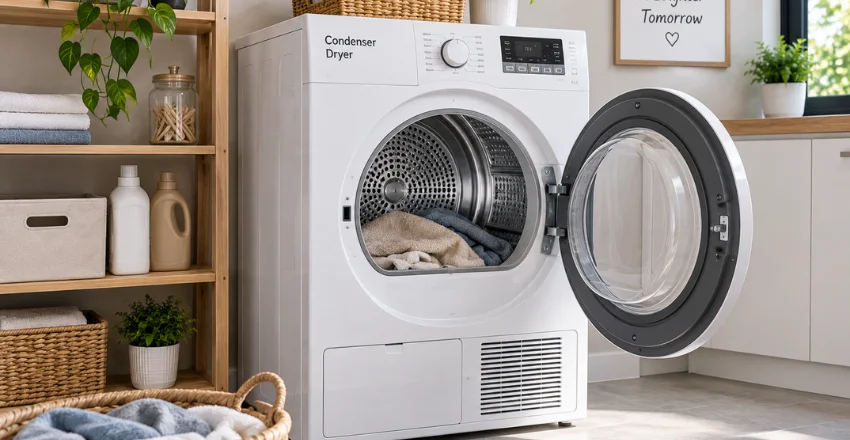
Buying a condenser dryer in the UK can still suit households that value lower upfront costs and faster drying. It collects moisture inside the appliance, so you don’t need an outside vent. The main drawback is higher electricity use compared with modern heat-pump machines.
Quick answer: A conventional condenser model heats air, passes it through wet laundry, then cools the damp air to collect water. It needs no external vent, so installation is flexible. The trade-off is higher electricity use than a heat-pump model, although drying cycles are often quicker and purchase prices are usually lower.
Condenser Tumble Dryer: Key Facts at a Glance
| Condenser Dryer | What UK Buyers Should Know |
|---|---|
| Vent required | No external vent is normally required. |
| Moisture removal | Water collects in a removable tank or drains through a hose. |
| Typical purchase price | Around £199 to £529, with a £307 average in current Which? data |
| Average annual energy cost | Around £139 in Which? estimates based on three loads weekly |
| Heat-pump comparison | Heat-pump models average around £54 yearly under the same assumptions. |
| Drying speed | Conventional models are generally quicker than heat pump machines. |
| Installation | Needs power, space, and suitable room ventilation |
| Main maintenance | Empty the tank, clean the lint filter, and maintain the heat exchanger. |
| Best suited to | Buyers prioritizing purchase price, convenience, and faster cycles |
| Main drawback | Higher electricity use and greater long-term running costs |
Key Takeaways
- Conventional condenser machines do not require an external ventilation hose.
- They usually cost less upfront than heat-pump alternatives.
- They use considerably more electricity in typical use.
- Sensor drying can prevent unnecessary cycle time and energy use.
- Frequent users should compare five-year ownership costs before buying.
- Great Britain is introducing tighter efficiency rules for new tumble dryers.
- Those rules do not take your existing appliance out of service.
How Does a Condenser Dryer Work?
The appliance first heats air and sends it through the rotating drum. That warm air absorbs moisture from wet fabrics as they tumble. The moisture-laden air then passes through a cooling or condensing section. The water vapor condenses and collects in a removable reservoir. Some machines can send this water directly into a household drain instead.
The process removes the need for a hose carrying damp air outdoors. This design gives you more freedom when choosing an installation location. You still need suitable airflow around the appliance and the clearances specified by its manufacturer. A poorly ventilated room can become warm and uncomfortable during repeated drying cycles.
Condenser vs Heat Pump vs Vented Dryers
The three main dryer types deal with heat and moisture differently. Those differences affect installation, purchase price, cycle times, and electricity consumption. The right choice depends heavily on how often your household dries laundry.
| Feature | Conventional Condenser | Heat Pump | Vented |
|---|---|---|---|
| External vent needed | No | No | Yes. |
| Moisture collection | Internal tank or drain | Internal tank or drain | Expelled outdoors |
| Upfront cost | Usually moderate | Usually higher | Usually lower |
| Energy use | High | Lowest | High |
| Drying temperature | Higher | Lower | Higher |
| Cycle speed | Often quicker | Often slower | Often quick |
| Fabric care | More heat exposure | Gentler lower temperatures | More heat exposure |
| Placement flexibility | Good | Good | Limited by venting |
Heat-pump models recycle warm air instead of repeatedly heating a fresh supply. This greatly reduces electricity consumption during normal use. Lower operating temperatures can also be gentler on clothing. A conventional model remains attractive when purchase price matters more than lifetime energy use. It may also suit households using a machine only occasionally.
Frequent users have a stronger financial reason to consider heat-pump technology.
How Much Does One Cost to Run in the UK?
Electricity cost depends on your model, program selection, and drying frequency. Load size and your electricity tariff also change the final figure. Published averages therefore work better as comparisons than guaranteed household bills.
This currently estimates around £139 yearly for conventional condenser machines. Its comparable heat-pump average is about £54 yearly for three cotton loads each week. That creates an estimated annual difference of roughly £85.
Ofgem’s average electricity rate is 26.11p per kWh until 30 September 2026. It becomes 26.32p per kWh from 1 October under the next price-cap period. Your own rate can differ by tariff, region, and payment method.
Look Beyond the Purchase Price
A cheaper appliance can cost more over several years of electricity use. Using current Which? averages provides a useful illustration for regular households. Actual ownership costs will vary with purchase discounts, tariffs, and usage.
| Cost Example | Conventional Condenser | Heat Pump |
|---|---|---|
| Average purchase price | £307 | £661 |
| Average yearly energy | £139 | £54 |
| Purchase plus 1 year | £446 | £715 |
| Purchase plus 3 years | £724 | £823 |
| Purchase plus 5 years | £1,002 | £931 |
This example shows why the cheapest sticker price does not always mean the lowest ownership cost. The higher initial heat-pump price becomes less important over several years. Heavy dryer use can bring that crossover point forward.
Pros and Cons for UK Homes
Conventional condenser models offer straightforward installation and familiar controls. They also tend to complete loads faster than lower-temperature heat-pump alternatives. Those benefits can matter when laundry turnaround is more important than maximum efficiency.
Pros
- No external wall vent is normally needed.
- Purchase prices can be lower than heat-pump models.
- Drying cycles are often relatively quick.
- Many models include automatic moisture sensors.
- Some units can drain water automatically.
Cons
- Electricity use is considerably higher.
- The water reservoir needs regular emptying unless connected to a drain.
- Higher temperatures can be harder on some fabrics.
- The condenser and lint filters need routine cleaning.
- Poor condensation performance can release unwanted humidity into the room.
Moisture control deserves attention in smaller laundry rooms. If your home already struggles with condensation, Scrollex’s dehumidifier guide explains practical ways to manage excess indoor moisture. Dryer maintenance should still remain the first step.
What to Check Before Buying
Capacity should fit the loads produced by your washing machine and household. A mismatched drum can force you to split washing into several drying cycles. That wastes both time and electricity. Look for sensor drying rather than relying only on fixed timers. Sensors stop or adjust the cycle when laundry reaches the selected dryness level.
This can reduce unnecessary heating and protect clothing from excessive drying. Also compare dimensions, noise, program selection, and condenser accessibility. Check whether the water tank is easy to reach and empty. A direct-drain option can remove that chore when suitable plumbing is available.
A kitchen or utility-room renovation may change where you can install the machine. Scrollex’s new kitchen cost guide can help when appliance replacement forms part of a larger project. Always follow the dryer’s stated ventilation and clearance requirements.
Maintenance That Keeps Drying Efficient
Remove lint from the filter after every drying load. Restricted airflow can extend cycle times and increase energy consumption. Lint buildup can also increase overheating risk. Empty the water container regularly unless your machine drains automatically. Clean the heat exchanger according to the manufacturer’s instructions.
Which advises routine filter cleaning and periodic heat-exchanger maintenance for conventional machines. Moisture sensors can also collect detergent or fabric-care residue over time. Follow your manual when cleaning these surfaces because designs differ. Keeping airflow paths clean helps the machine work as intended.
Are UK Rules Changing for Conventional Models?
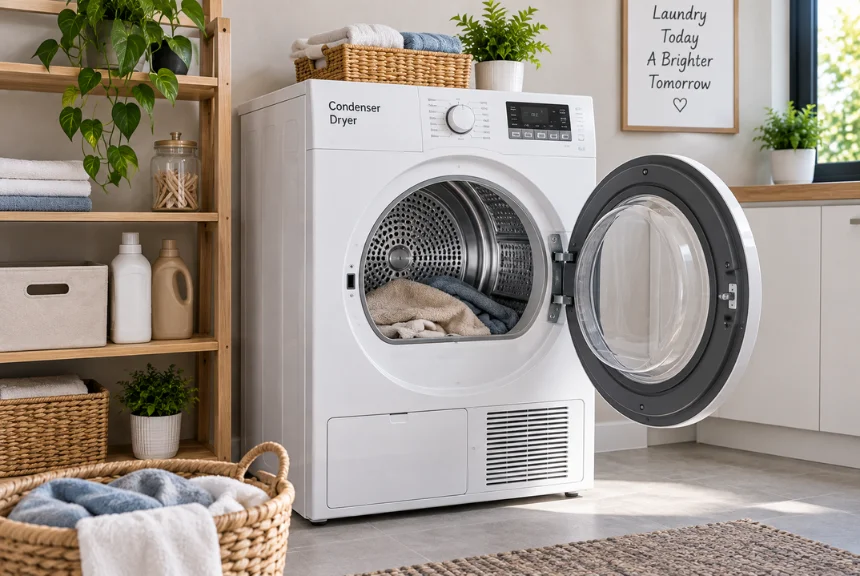
Great Britain introduced new tumble-dryer regulations in 2026. The rules raise minimum energy-performance standards and are designed to phase inefficient models out of new sales. They also introduce tighter requirements for condensation, standby, and labeling.
The regulations come into force in several stages. Some provisions apply from 19 September 2026, with further measures starting on 19 January 2027. The requirements apply to England, Scotland, and Wales. This does not mean households must stop using existing machines.
The changes concern products entering the Great Britain market and the standards those products must meet. Northern Ireland follows a different regulatory framework connected with applicable EU product rules.
Who Should Still Consider One?
An occasional dryer user may still value the lower purchase price. Someone needing quick turnaround could also prefer the higher-temperature drying method. The financial penalty is smaller when the appliance runs infrequently. Regular users should seriously consider heat-pump alternatives. A household drying several loads each week can spend much more on electricity over several years.
Current cost data shows a sizeable difference between the two technologies. Your available budget also matters. Spending more upfront isn’t always practical, even when long-term costs are lower. Compare the total price, realistic usage, and expected ownership period before deciding.
For more household appliance and improvement advice, browse Scrollex’s Home Improvement guides. Comparing lifetime costs across major purchases can prevent a cheap appliance from becoming an expensive one.
Final Buying Advice
Start with how often your household will use the machine. Then compare purchase price, yearly energy consumption, and likely ownership length. This gives a clearer answer than comparing in-shop prices. Choose sensor drying, suitable capacity, and easy-to-clean filters wherever possible.
Confirm installation requirements before ordering. Regular maintenance will also help avoid unnecessarily long cycles. For frequent UK use, heat-pump technology now has a strong running-cost advantage. Conventional machines still offer speed and cheaper entry prices for certain households. The right choice depends on budget, usage, and how long you plan to keep it.
Frequently Asked Questions
Does a Condenser Dryer Need a Vent?
No external exhaust vent is normally required. Instead, it converts moisture into liquid water and stores it inside the machine. You still need the ventilation and installation clearances stated in the product manual.
Is a Condenser Tumble Dryer Expensive to Run?
Conventional models generally use substantially more electricity than heat-pump machines. This currently estimates average yearly costs at around £139, compared with about £54 for heat pumps. Your cost depends on frequency, model efficiency, and electricity tariff.
Do You Need to Empty the Water Tank Every Time?
Many manufacturers recommend checking or emptying the reservoir regularly. Waiting until it is completely full can interrupt a drying cycle. A compatible drain hose can remove the need for manual emptying.
Can You Put One in a Garage?
Only install the appliance where its manufacturer allows. Cold spaces can reduce performance, while some manuals specify minimum room temperatures. Check the operating-temperature range before placing any dryer in an unheated garage.
Are Conventional Condenser Dryers Being Banned in the UK?
Great Britain is phasing inefficient models out of the new-product market through tighter minimum standards. The change does not require households to discard machines they already own. Regulations also differ between Great Britain and Northern Ireland.
Is a Heat-Pump Model Worth Paying More For?
It becomes more attractive when you dry laundry frequently or expect long ownership. Lower electricity use can offset part or all of the higher initial cost over time. Occasional users may value a lower upfront cost more.