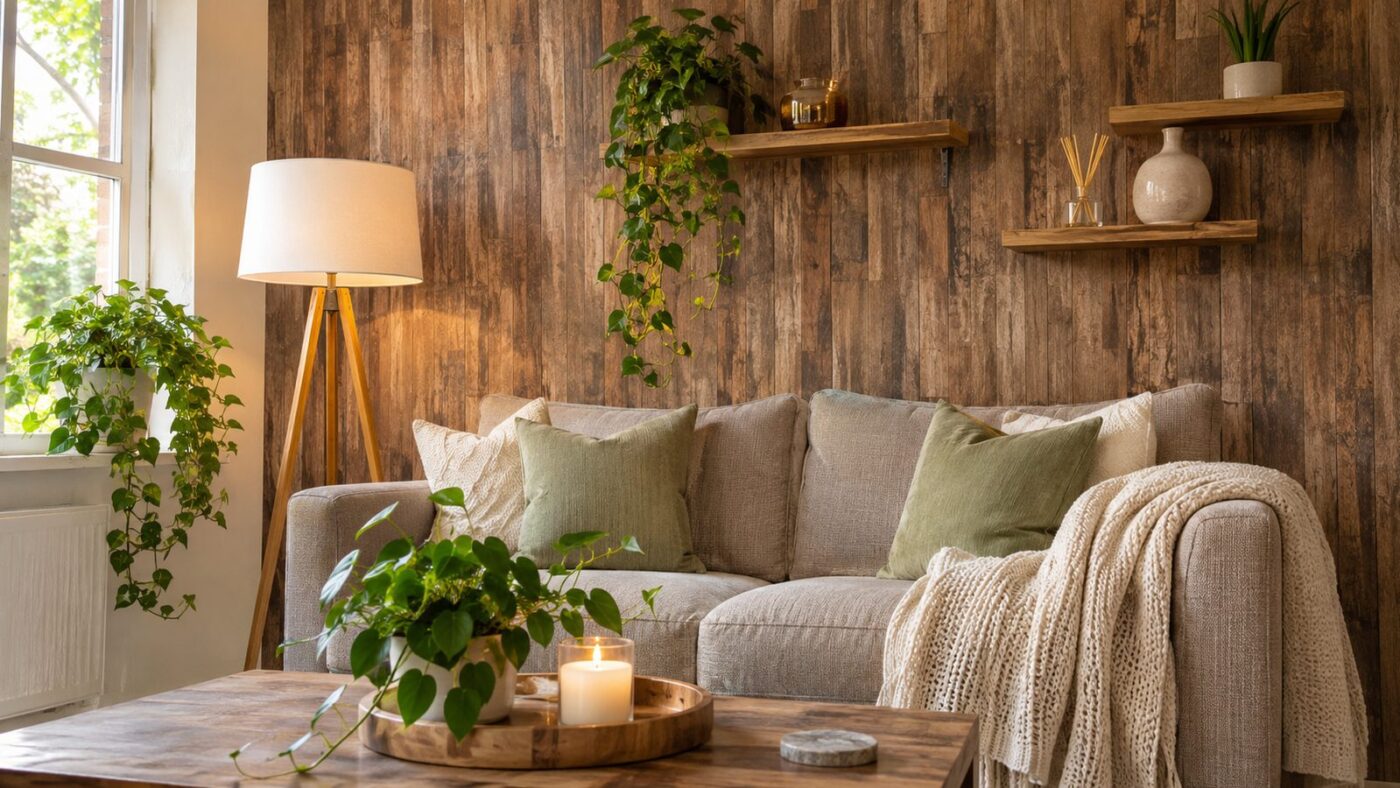
Wood effect wallpaper can bring timber character into a room without fitting real boards or decorative wooden panels. Modern designs reproduce oak, walnut, painted planks, fluted slats and traditional panelling with convincing detail. They also give UK homeowners more flexibility when cost, space or installation time matters. The best design depends on your room, lighting, existing furniture and the level of realism you expect. Some patterns create a subtle background, while others are designed as a strong feature wall. Choosing the right scale and colour usually matters more than following one particular trend. Direct answer: Wood effect wallpaper recreates timber grain, wooden boards, slats or decorative wall panels using printed or textured wallcoverings. It can provide a timber-inspired finish without installing real wood. For most UK homes, natural oak tones, vertical slats and painted panel designs offer the easiest combinations with existing furniture.
Wood Effect Wallpaper at a Glance
| Consideration | Practical guidance |
|---|---|
| Popular looks | Oak, walnut, wood slats, reclaimed planks and painted panelling |
| Good rooms | Living rooms, bedrooms, hallways, dining rooms and home offices |
| Typical mainstream pricing | Often around £9–£30 per roll |
| Premium options | Specialist and designer finishes can cost considerably more |
| Best for small rooms | Light timber colours or slim vertical patterns |
| Best feature-wall option | Slatted, fluted or darker walnut-style designs |
| Installation | Depends on whether the product is paste-the-wall or paste-the-paper |
| Main advantage | Timber character without fitting solid wooden cladding |
Why Wood-Look Wallpaper Works in UK Homes
Timber has natural warmth, but fitting real boards can require more materials, tools and preparation. Wallpaper offers a simpler decorative route when you mainly want the appearance. It can also reduce the depth added to a wall. This matters in smaller British rooms where several centimetres can affect furniture placement. A printed finish keeps the surface relatively slim while creating visual depth. It also makes changing the room later much easier. Current UK ranges show how broad the choice has become. Retailers now stock traditional planks, carved panels, slatted effects and contemporary fluted patterns. Colours extend far beyond standard brown timber.
The Main Styles to Consider
Natural Oak and Light Timber
Light oak patterns suit rooms where you want warmth without creating a dark focal point. They work particularly well with off-white walls, cream upholstery and muted green accents. Pale timber also complements many Scandinavian-inspired interiors. These designs can be useful in smaller living rooms or bedrooms. A lighter background reflects more available light than deep walnut or charcoal finishes. Choose a restrained grain when the room already contains several patterns.
Vertical Slat and Fluted Designs
Vertical slats are among the most contemporary choices available. Their repeated lines can make a ceiling appear higher and bring stronger structure to a plain wall. They suit media walls, dining areas and modern bedrooms particularly well. The effect becomes stronger when the printed design includes shadows between each slat. Check samples from different viewing distances before ordering. A pattern that looks convincing close-up may appear flatter across a whole room.
Reclaimed and Rustic Planks
Reclaimed plank designs use knots, grain changes and irregular colours to create a more relaxed finish. They work well with industrial furniture, cottage-style rooms and informal dining spaces. Grey-washed and distressed patterns can also soften the traditional log-cabin appearance. Avoid adding too many competing rustic finishes nearby. Timber flooring, heavily grained furniture and patterned walls can make the room feel busy. One dominant wood finish usually creates a calmer result.
Painted Panel Effects
Painted panelling patterns imitate tongue-and-groove boards, Shaker-style panels or more decorative mouldings. They can create architectural detail without installing timber strips across the wall. Soft green, white, grey and neutral versions suit many UK interiors. This approach is especially useful in entrances. Scrollex’s hallway panelling ideas explain how vertical lines and panel proportions affect narrow spaces. Similar principles apply when the panelling is printed rather than physically built.
Wood Effect Wallpaper Versus Real Panelling
| Feature | Wallpaper | Real timber or MDF panelling |
|---|---|---|
| Wall depth | Minimal | Adds physical depth |
| Installation | Usually quicker | Requires measuring, cutting and fixing |
| Texture | Printed or lightly embossed | Genuine raised surface |
| Removal | Usually easier | More permanent |
| Cost | Often lower | Materials and labour can increase costs |
| Realism | Depends on print quality | Genuine architectural depth |
| DIY difficulty | Moderate | Moderate to advanced |
Wallpaper makes sense when appearance is your main priority. Real panelling suits projects where physical depth and architectural detail matter more. Neither option is automatically right for every room. If you are building or altering a partition first, finish the structural work before decorating. Scrollex’s UK stud wall guide covers framing, plasterboard and preparation considerations. A sound, smooth surface will usually give decorative wallcoverings a cleaner finish.
Which Rooms Suit Wood Effect Wallpaper?
Living Rooms
A living room gives you enough viewing distance for larger timber patterns. Slat effects work well behind televisions, shelving or low media furniture. Warm oak tones can also balance cool grey upholstery. Keep surrounding walls quieter if the feature design has strong contrast. This gives the grain or panel pattern enough visual space. Repeating one timber tone through smaller furniture pieces can connect the scheme.
Bedrooms
Bedrooms usually benefit from softer colours and less aggressive contrast. Light oak, painted boards and warm neutral panel effects can sit comfortably behind a bed. Darker walnut can work when the room has good natural or layered lighting. Use bedding and curtains to soften hard-looking printed lines. Natural fabrics pair particularly well with timber-inspired patterns. A sample viewed beside existing textiles can prevent mismatched undertones.
Hallways
Vertical designs can suit narrow halls because they draw attention upwards. Lighter colours are usually easier to manage where daylight is limited. Full-height dark patterns need stronger lighting to avoid making the entrance feel enclosed. Plan switches and sockets before starting decoration. Scrollex’s light switch guide can help when wall controls form part of a broader refurbishment. Decorative work should not cover or obstruct electrical fittings.
Utility Rooms
A timber print can stop a practical utility area feeling clinical. Painted boards or subtle slats work well beside simple cabinets and open shelves. Choose the wallcovering according to the room’s moisture and cleaning demands. Good layout remains more important than surface decoration. Scrollex’s utility room ideas cover storage, drying space and everyday workflow. Finish those decisions before choosing the wall pattern.
How Much Does Wood Effect Wallpaper Cost in the UK?
Mainstream products currently cover a broad price range. Many UK retail options sit around £9 to £30 per roll. Specialist murals, premium brands and unusual materials can cost substantially more. Price should not be your only comparison point. Check roll dimensions, pattern repeat, coverage, application method and cleaning instructions. A cheaper roll may require more material when the pattern creates significant waste. Made-to-measure murals use a different pricing model. These products are often priced by square metre rather than standard rolls. Measure the wall carefully before comparing them with conventional wallpaper.
How to Choose a Convincing Design
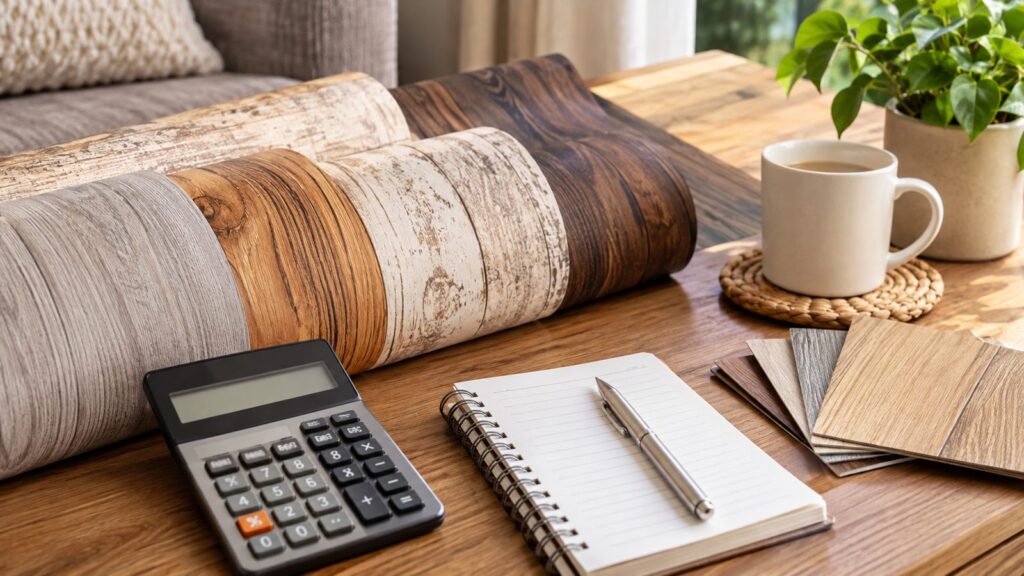
Start by looking closely at the printed grain. Strong repetition can make an inexpensive design more obvious across a wide wall. More varied knots, grain and shading usually create a less repetitive appearance. Next, check the scale against your room. Large boards can dominate a small wall, while tiny slats may look overly busy. Samples are useful because online images rarely show the design at true room scale. Finally, consider the direction of the pattern. Vertical boards emphasise height, while horizontal planks can visually widen a wall. Your furniture and architectural features should guide that choice.
What to Check Before You Buy
Before ordering, compare the practical specification alongside the colour and pattern.
- Measure wall width and height accurately.
- Check the roll width and total length.
- Allow for pattern matching and trimming.
- Confirm whether paste goes on the wall or paper.
- Check washability for kitchens, halls or utility spaces.
- Order from the same batch where possible.
- Test a sample under daytime and evening lighting.
- Inspect the wall for bumps, cracks or loose paint.
These checks reduce common decorating problems. They also make price comparisons more meaningful. A product with easier installation or lower pattern waste can offer better value.
Common Mistakes to Avoid
The biggest mistake is choosing from a close-up product photograph alone. Wallpaper is experienced across several square metres, not within one sample image. Always consider how often the grain or slat pattern repeats. Another mistake is combining too many wood tones. Flooring, furniture and wall patterns can all compete for attention. Aim for similar undertones or create clear contrast between them. Poor wall preparation also affects the final result. Raised defects can remain visible beneath thinner papers. Repair, clean and prepare the surface according to the wallpaper manufacturer’s guidance.
Is It Worth Choosing Wallpaper Instead of Real Wood?
For decorative projects, wallpaper can be a practical alternative. It provides the look of timber without adding heavy materials or complicated joinery. It is also easier to replace when your decorating preferences change. Real panelling still has advantages where texture matters. Physical slats create deeper shadows and genuine surface relief. They can also provide a more permanent architectural finish. Your budget and expectations should guide the choice. Choose printed finishes for adaptable decoration and physical panels for structural depth. Browse Scrollex’s wider Home Improvement guides when planning connected renovation work.
Frequently Asked Questions
Is wood effect wallpaper realistic?
Good-quality designs can look convincing because they combine detailed grain, colour variation and printed shadows. Embossed finishes can add another layer of texture. Viewing a sample in your actual room remains the safest test.
Can wood effect wallpaper make a small room look bigger?
It can influence how the room feels, although it cannot change its physical size. Pale colours and narrow vertical lines can make smaller spaces feel lighter or taller. Busy, dark patterns may have the opposite effect.
Can I use it in a bathroom?
Only use a product where the manufacturer specifically approves that environment. Bathrooms create moisture, condensation and direct splash risks. A standard paper intended for dry rooms may not perform well there.
Is wood wallpaper cheaper than real panelling?
It often costs less because it avoids timber, battens and much of the fitting work. Actual costs still depend on wall size, product quality and labour. Premium wallcoverings can sometimes cost more than basic DIY panelling materials.
What colour wood effect works with grey furniture?
Warm oak and honey tones can add useful contrast beside cool grey furniture. Pale washed timber creates a softer, more neutral combination. Walnut can create a stronger and more formal contrast.
Choose the Finish Around the Room
The strongest scheme starts with the room rather than the pattern. Consider light levels, furniture, flooring and wall dimensions before choosing a timber style. Then compare samples at home under the lighting you use every day. Wood effect wallpaper gives UK homeowners a flexible way to add grain, warmth and panel-inspired detail. It works best when the pattern supports the wider room instead of overpowering it. Careful measuring and sample testing will make the finished wall far more convincing. —